Introduction
Geofencing Tools are software platforms that allow businesses and organizations to define virtual geographic boundaries and trigger automated actions when devices or users enter or leave those zones. They enable location-based marketing, asset tracking, workforce management, and enhanced security through precise geolocation.
These tools are increasingly essential for industries such as retail, logistics, healthcare, and transportation. By combining GPS, RFID, Wi-Fi, or BLE technologies, geofencing tools enable context-aware alerts, customer engagement, and operational efficiency.
Real-world use cases include:
- Retailers sending promotions to customers entering a store
- Logistics companies tracking delivery vehicles and assets
- Healthcare facilities managing patient flow and staff monitoring
- Security teams setting restricted zone alerts
- Event organizers sending notifications to attendees within event boundaries
Evaluation criteria for buyers:
- Geolocation accuracy and range
- Integration with mobile apps, CRM, and analytics tools
- Ease of creating and managing geofences
- Real-time monitoring and alerts
- Data analytics and reporting capabilities
- Support for multiple devices and platforms
- Security and privacy compliance
- API availability for custom integrations
- Scalability for enterprise deployment
- Pricing and subscription model
Best for: Retailers, logistics companies, healthcare facilities, security teams, and marketing professionals.
Not ideal for: Organizations with limited location-based use cases or no mobile app integration.
Key Trends in Geofencing Tools
- Integration with AI and predictive analytics to trigger context-aware actions
- Cloud-based platforms with cross-device synchronization
- Real-time notifications and automated workflow integration
- Enhanced mobile SDKs for iOS and Android applications
- BLE and Wi-Fi support alongside GPS for indoor geofencing
- Data privacy compliance with GDPR and CCPA standards
- Integration with marketing automation and CRM platforms
- Advanced reporting and analytics dashboards
- Multi-layer geofencing for granular control
- Low-power geofencing technologies for battery-efficient mobile tracking
How We Selected These Tools (Methodology)
- Evaluated market adoption and industry recognition
- Assessed feature completeness including geolocation, notifications, and analytics
- Analyzed reliability, uptime, and performance metrics
- Checked security and privacy compliance (GDPR, SOC 2)
- Reviewed integration with CRM, marketing, and mobile platforms
- Considered suitability across SMB, mid-market, and enterprise use cases
- Examined deployment flexibility: cloud, hybrid, or on-premises
- Reviewed documentation, tutorials, and support channels
- Compared pricing models and value for features offered
- Prioritized actively maintained tools with recent updates
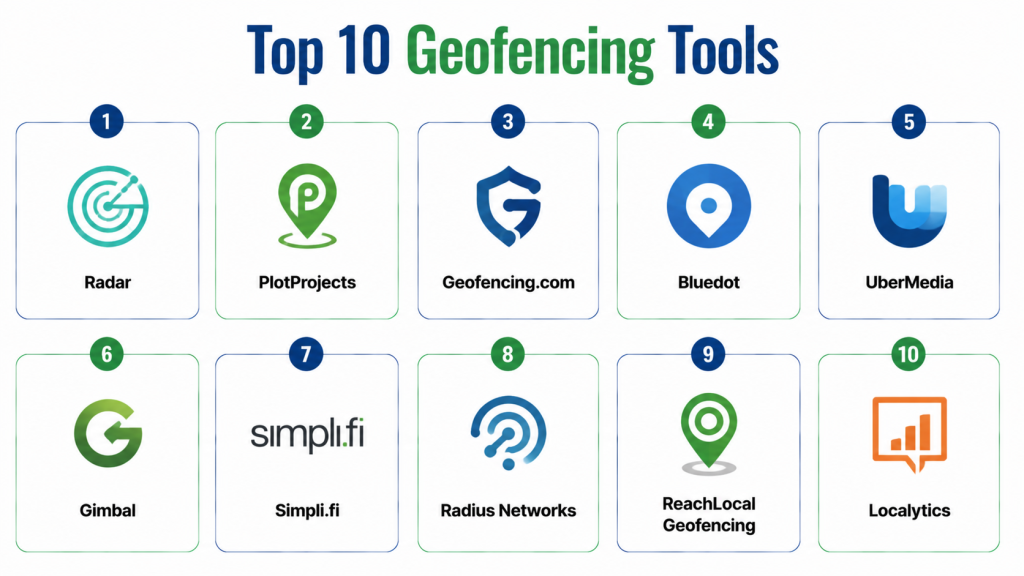
Top 10 Geofencing Tools
1- Radar
Short description: Radar provides location-based SDKs and APIs for mobile apps, enabling geofencing, location tracking, and trip insights.
Key Features
- Geofence creation and monitoring
- Real-time location tracking and event triggers
- Trip and movement insights
- Mobile SDKs for iOS and Android
- API integration with CRM and analytics
- Customizable notifications
Pros
- Accurate and developer-friendly
- Extensive mobile SDK support
Cons
- Premium pricing for high-volume use
- Limited offline geofencing support
Platforms / Deployment
- Web, iOS, Android, Cloud
Security & Compliance
- Encryption and secure API tokens
- GDPR and SOC 2 compliance
Integrations & Ecosystem
- Integrates with Salesforce, HubSpot, Braze
- API access for custom workflows
- Mobile app and web platform integration
Support & Community
- Full documentation and SDK examples
- Enterprise support and community forums
2- PlotProjects
Short description: Cloud-based geofencing and location platform for proximity marketing, notifications, and analytics.
Key Features
- Geofence and beacon management
- Real-time push notifications
- Campaign analytics and reporting
- Multi-platform support
- Event-triggered marketing actions
Pros
- User-friendly interface
- Strong analytics dashboards
Cons
- Pricing can be high for smaller businesses
- Limited offline tracking
Platforms / Deployment
- Web, iOS, Android, Cloud
Security & Compliance
- GDPR-compliant
- Data encryption
Integrations & Ecosystem
- Integrates with mobile apps, marketing automation, and CRM
- REST API support
Support & Community
- Documentation and tutorials
- Dedicated support team
3- Geofencing.com
Short description: Provides geofencing and location marketing tools for automated alerts and mobile engagement.
Key Features
- Real-time geofence monitoring
- Push notification campaigns
- Visitor and device analytics
- Multi-tenant management
- Integration with mobile apps
Pros
- Easy setup for marketing campaigns
- Multi-device support
Cons
- Limited advanced analytics
- Less suitable for enterprise-level tracking
Platforms / Deployment
- Web, iOS, Android, Cloud
Security & Compliance
- Not publicly stated
Integrations & Ecosystem
- API integration with mobile and CRM platforms
Support & Community
- Support documentation and email support
- Community resources
4- Bluedot
Short description: Location platform offering geofencing, location-based triggers, and marketing automation integration.
Key Features
- Mobile geofence creation
- Real-time triggers and notifications
- Campaign analytics
- SDK for iOS and Android
- Custom location rules
Pros
- High precision geolocation
- Developer-friendly SDK
Cons
- Pricing depends on usage volume
- Limited offline capabilities
Platforms / Deployment
- Web, iOS, Android, Cloud
Security & Compliance
- Data encryption
- GDPR-compliant
Integrations & Ecosystem
- Integrates with CRM and marketing platforms
- REST API access
Support & Community
- Full documentation
- Enterprise support packages
5- UberMedia
Short description: Location intelligence and geofencing platform for marketing campaigns and audience targeting.
Key Features
- Geofence and polygon creation
- Audience segmentation and targeting
- Campaign automation
- Mobile SDK and APIs
- Analytics dashboards
Pros
- Strong location-based marketing capabilities
- Scalable for large audiences
Cons
- Expensive for small businesses
- Limited offline support
Platforms / Deployment
- Web, iOS, Android, Cloud
Security & Compliance
- Not publicly stated
Integrations & Ecosystem
- CRM and marketing platform integration
- API access for developers
Support & Community
- Documentation and support team
- Community forums
6- Gimbal
Short description: Geofencing and proximity marketing platform with location-based engagement features.
Key Features
- Geofence and beacon management
- Mobile SDK for location tracking
- Push notifications and campaigns
- Analytics and reporting
- Integration with apps and CRM
Pros
- Strong proximity marketing tools
- Multiple notification channels
Cons
- Enterprise-focused pricing
- Complex for small deployments
Platforms / Deployment
- Web, iOS, Android, Cloud
Security & Compliance
- Data encryption
- GDPR compliance
Integrations & Ecosystem
- Mobile apps, CRM, and marketing platforms
- SDK and API support
Support & Community
- Documentation and enterprise support
- Online forums
7- Simpli.fi
Short description: Programmatic advertising platform with geofencing and location-based marketing capabilities.
Key Features
- Geofenced ad targeting
- Audience segmentation
- Real-time campaign optimization
- Reporting and analytics dashboards
- Integration with mobile apps
Pros
- Excellent for marketing campaigns
- Scalable audience targeting
Cons
- Less suited for operational tracking
- Pricing based on ad spend
Platforms / Deployment
- Web, iOS, Android, Cloud
Security & Compliance
- GDPR-compliant
- Data security protocols
Integrations & Ecosystem
- CRM and ad platforms integration
- API support
Support & Community
- Documentation and customer support
- Community forums
8- Radius Networks
Short description: Location services provider offering geofencing and beacon-based tracking for mobile applications.
Key Features
- Geofence management
- Mobile SDK for iOS and Android
- Real-time event triggers
- Analytics and reporting
- Integration with apps
Pros
- Precise location tracking
- Developer-friendly SDK
Cons
- Limited marketing features
- Enterprise pricing
Platforms / Deployment
- Web, iOS, Android, Cloud
Security & Compliance
- Not publicly stated
Integrations & Ecosystem
- Mobile apps and API integrations
Support & Community
- Documentation and email support
- Community resources
9- ReachLocal Geofencing
Short description: Marketing-focused geofencing tool for local advertising and customer engagement.
Key Features
- Geofenced ad targeting
- Mobile push notifications
- Campaign analytics
- Multi-location management
- Integration with CRM
Pros
- Optimized for small to medium businesses
- Easy to set up campaigns
Cons
- Limited advanced analytics
- Less suitable for operational geofencing
Platforms / Deployment
- Web, iOS, Android, Cloud
Security & Compliance
- Not publicly stated
Integrations & Ecosystem
- API and CRM integration
Support & Community
- Documentation and support team
10- Localytics
Short description: Mobile engagement platform with geofencing for app-based marketing and analytics.
Key Features
- Geofence-based push notifications
- In-app messaging
- Campaign analytics
- Audience segmentation
- Integration with mobile apps and CRM
Pros
- Strong mobile app engagement features
- Real-time analytics
Cons
- Focused on app marketing
- Enterprise pricing
Platforms / Deployment
- Web, iOS, Android, Cloud
Security & Compliance
- GDPR compliance
Integrations & Ecosystem
- Integrates with mobile apps, CRM, and analytics
- API access
Support & Community
- Documentation and support
- Community resources
Comparison Table (Top 10)
| Tool Name | Best For | Platform(s) Supported | Deployment | Standout Feature | Public Rating |
|---|---|---|---|---|---|
| Radar | Developers | Web, iOS, Android | Cloud | Mobile SDK and geofence triggers | N/A |
| PlotProjects | Marketing | Web, iOS, Android | Cloud | Campaign analytics | N/A |
| Geofencing.com | Marketing | Web, iOS, Android | Cloud | Multi-device alerts | N/A |
| Bluedot | Developers | Web, iOS, Android | Cloud | High precision geolocation | N/A |
| UberMedia | Marketing | Web, iOS, Android | Cloud | Audience targeting | N/A |
| Gimbal | Proximity marketing | Web, iOS, Android | Cloud | Beacon and geofence management | N/A |
| Simpli.fi | Advertising | Web, iOS, Android | Cloud | Programmatic geofencing | N/A |
| Radius Networks | Developers | Web, iOS, Android | Cloud | Beacon-based tracking | N/A |
| ReachLocal | SMB marketing | Web, iOS, Android | Cloud | Local ad campaigns | N/A |
| Localytics | App engagement | Web, iOS, Android | Cloud | In-app geofencing | N/A |
Top 3 Enterprise: Radar, Bluedot, Gimbal
Top 3 SMB: PlotProjects, Geofencing.com, ReachLocal
Top 3 Developers: Radar, Radius Networks, Bluedot
Evaluation & Scoring of Geofencing Tools
| Tool Name | Core (25%) | Ease (15%) | Integrations (15%) | Security (10%) | Performance (10%) | Support (10%) | Value (15%) | Weighted Total (0–10) |
|---|---|---|---|---|---|---|---|---|
| Radar | 10 | 9 | 9 | 8 | 9 | 8 | 7 | 8.8 |
| PlotProjects | 8 | 8 | 8 | 7 | 8 | 7 | 8 | 7.8 |
| Geofencing.com | 8 | 8 | 7 | 7 | 8 | 7 | 7 | 7.4 |
| Bluedot | 9 | 8 | 8 | 8 | 9 | 8 | 7 | 8.3 |
| UberMedia | 8 | 7 | 8 | 7 | 8 | 7 | 7 | 7.4 |
| Gimbal | 9 | 8 | 8 | 8 | 8 | 8 | 7 | 8.1 |
| Simpli.fi | 8 | 8 | 7 | 7 | 8 | 7 | 7 | 7.5 |
| Radius Networks | 8 | 7 | 8 | 7 | 8 | 7 | 7 | 7.4 |
| ReachLocal | 7 | 8 | 7 | 7 | 7 | 7 | 7 | 7.2 |
| Localytics | 8 | 8 | 7 | 7 | 8 | 7 | 7 | 7.5 |
Which Geofencing Tool Is Right for You?
Solo / Freelancer
Radar, PlotProjects, or Geofencing.com for app developers or small marketing campaigns.
SMB
PlotProjects, Geofencing.com, or ReachLocal for targeted campaigns and multi-location alerts.
Mid-Market
UberMedia, Localytics, or Gimbal for mobile app marketing and operational geofencing.
Enterprise
Radar, Bluedot, and Gimbal for scalable geofencing, analytics, and high-precision tracking.
Budget vs Premium
PlotProjects and Geofencing.com are cost-effective; Radar, Bluedot, and Gimbal offer premium enterprise features.
Feature Depth vs Ease of Use
Radar and Bluedot provide developer depth; PlotProjects and ReachLocal prioritize simplicity.
Integrations & Scalability
Radar, Gimbal, and Bluedot integrate with mobile SDKs, CRM, and analytics pipelines for enterprise-scale deployments.
Security & Compliance Needs
Select platforms with GDPR and SOC 2 compliance for handling sensitive location data.
Frequently Asked Questions (FAQs)
1- What is a geofencing tool?
Software that triggers actions or notifications when a device enters or exits a predefined geographic boundary.
2- Which devices are supported?
Most tools support iOS and Android smartphones and tablets, with some BLE or GPS devices.
3- Can geofencing work offline?
Limited offline capabilities exist; real-time triggers usually require an internet connection.
4- Are these tools secure?
Enterprise-grade tools include encryption, secure APIs, and GDPR compliance.
5- Can geofencing be integrated with apps?
Yes, mobile SDKs and APIs allow integration with native apps and CRM systems.
6- How accurate is geofencing?
Accuracy depends on GPS, Wi-Fi, or BLE signals, typically within a few meters.
7- Can geofencing track multiple locations?
Yes, most tools support multi-fence setups and polygonal geofences.
8- What industries benefit most?
Retail, logistics, healthcare, events, and marketing sectors.
9- Do these tools provide analytics?
Yes, most platforms offer dashboards with engagement, entry/exit events, and campaign performance.
10- What are common mistakes?
Ignoring device compatibility, privacy regulations, or failing to test geofences in real scenarios.
Conclusion
Geofencing Tools enable businesses to engage audiences, monitor assets, and improve operational efficiency through location-based triggers. Solo developers can start with Radar or PlotProjects; SMBs benefit from ReachLocal and Geofencing.com; enterprises rely on Bluedot and Gimbal for scalable solutions. Next steps: shortlist 2–3 platforms, run pilots, and verify integration, performance, and compliance before large-scale deployment.
