Introduction
Stadium Operations Software refers to integrated platforms designed to manage the complex operations of large sports and entertainment venues. These tools centralize scheduling, ticketing, security, maintenance, vendor management, and fan engagement into a single system. In 2026, stadiums are leveraging these platforms not just for operational efficiency but also for enhancing fan experiences, driving revenue, and ensuring compliance with safety and accessibility regulations.
Real-world use cases include:
- Coordinating multi-event scheduling and venue logistics for concerts, sports, and exhibitions.
- Monitoring security, crowd management, and emergency response in real time.
- Streamlining ticket sales, access control, and VIP services for attendees.
- Managing vendor contracts, concessions, and facility maintenance efficiently.
- Integrating analytics for fan engagement, concession trends, and operational KPIs.
Evaluation criteria for buyers:
- Core feature coverage (ticketing, scheduling, security, maintenance).
- Ease of use and staff adoption.
- Integration with existing ERP, CRM, and analytics systems.
- Mobile and remote accessibility.
- Security and compliance standards (SSO, encryption, GDPR).
- Reporting, analytics, and real-time monitoring capabilities.
- Vendor and resource management tools.
- Cost vs functionality and scalability.
Best for: Venue managers, stadium operators, event coordinators, and mid-to-large sports/entertainment organizations seeking centralized control and analytics.
Not ideal for: Small venues, pop-up events, or organizations with minimal operational complexity where standalone tools suffice.
Key Trends in Stadium Operations Software
- AI-powered predictive analytics for crowd behavior and maintenance needs.
- Integrated mobile apps for real-time staff coordination and fan engagement.
- Cloud-native deployments enabling multi-venue management and scalability.
- Enhanced cybersecurity with SSO, MFA, and audit trails.
- Data-driven fan experience optimization using behavior and engagement insights.
- Automated scheduling and resource allocation to reduce operational overhead.
- Advanced ticketing with dynamic pricing and contactless access control.
- IoT integration for facility monitoring (HVAC, lighting, parking, security sensors).
- Multi-vendor ecosystem connectivity for concessions, retail, and merchandise operations.
- Hybrid deployment models allowing on-premises control for sensitive operations while leveraging cloud scalability.
How We Selected These Tools (Methodology)
- Reviewed market adoption and mindshare across stadium management, sports venues, and entertainment arenas.
- Assessed completeness of core operational features and scalability options.
- Evaluated platform reliability and real-world performance signals.
- Considered security posture, including access control, compliance certifications, and data privacy.
- Examined integrations and ecosystem flexibility (APIs, ERP/CRM compatibility).
- Assessed customer fit across SMB, mid-market, and enterprise venues.
- Verified mobile and cloud accessibility for staff and management.
- Reviewed analytics capabilities and reporting depth.
- Prioritized tools actively updated with modern UI and 2026+ relevance.
- Considered practical deployment flexibility (cloud, on-prem, hybrid).
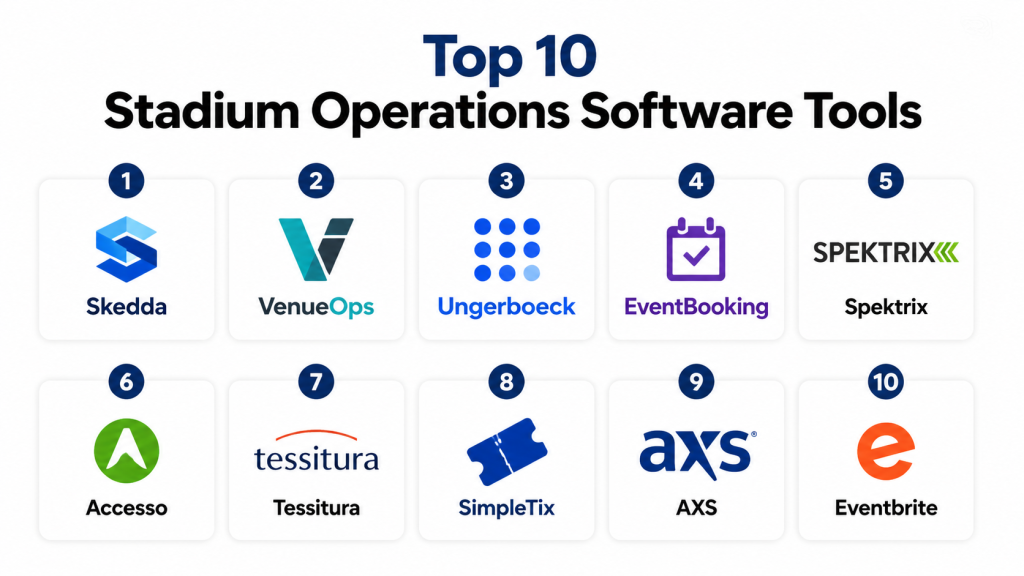
Top 10 Stadium Operations Software Tools
1- Skedda
Short description: Skedda is a venue scheduling and resource management platform ideal for stadium and event spaces of all sizes, enabling efficient allocation of facilities and resources.
Key Features
- Interactive floor plans for scheduling and space management.
- Online booking and automated approvals.
- Customizable rules and pricing for different zones.
- Mobile app for staff and visitors.
- Analytics on space usage and resource utilization.
Pros
- Easy-to-use interface for non-technical staff.
- Reduces double bookings and scheduling conflicts.
Cons
- Limited security modules compared to enterprise systems.
- May require additional tools for full operations management.
Platforms / Deployment
- Web / iOS / Android
- Cloud
Security & Compliance
- Not publicly stated
Integrations & Ecosystem
Integrates with calendars and basic ERP systems for scheduling.
- Google Calendar
- Outlook
- Zoom for event coordination
Support & Community
- Documentation available
- Email support and onboarding guides
- Varies / Not publicly stated for advanced enterprise community
2- VenueOps
Short description: VenueOps is a comprehensive venue management software focused on event scheduling, sales, and operations for stadiums and arenas.
Key Features
- Event and facility scheduling with conflict management.
- CRM integration for client and attendee management.
- Financial reporting and contract management.
- Task and resource allocation for staff.
- Vendor and concession management.
Pros
- Centralizes operations across departments.
- Strong CRM and reporting capabilities.
Cons
- Can be complex for small venues.
- Learning curve for staff onboarding.
Platforms / Deployment
- Web / iOS / Android
- Cloud / Hybrid
Security & Compliance
- Not publicly stated
Integrations & Ecosystem
- Integrates with ticketing systems, financial software, and email platforms.
- Salesforce
- QuickBooks
- Mailchimp
Support & Community
- 24/7 support available
- Training and knowledge base
3- Ungerboeck
Short description: Ungerboeck offers end-to-end venue and event management solutions for stadiums, combining ticketing, operations, and CRM in a single platform.
Key Features
- Ticketing and access control
- Event logistics and operations management
- CRM for attendees and sponsors
- Resource and equipment management
- Advanced reporting dashboards
Pros
- Enterprise-grade solution
- Highly customizable workflows
Cons
- Premium pricing may not suit smaller venues
- Implementation can be resource-intensive
Platforms / Deployment
- Web / Windows / iOS / Android
- Cloud / Hybrid
Security & Compliance
- SOC 2, Not publicly stated for other certifications
Integrations & Ecosystem
Integrates with financial software, ticketing, and marketing platforms.
- Salesforce
- Oracle NetSuite
- Eventbrite
Support & Community
- Enterprise support packages
- Training and community forums
4- EventBooking
Short description: EventBooking simplifies scheduling, ticketing, and resource management for stadiums, emphasizing ease of use for mid-size venues.
Key Features
- Venue and resource scheduling
- Online ticketing and access management
- Contract and invoice management
- Analytics for attendance and revenue
- Mobile staff app
Pros
- Intuitive UI and setup
- Affordable for mid-market venues
Cons
- Limited advanced reporting features
- Fewer AI/automation tools
Platforms / Deployment
- Web / iOS / Android
- Cloud
Security & Compliance
- Not publicly stated
Integrations & Ecosystem
- Integrates with basic CRM and accounting platforms
- QuickBooks
- Google Workspace
- Zapier
Support & Community
- Email and phone support
- Onboarding guides available
5- Spektrix
Short description: Spektrix combines ticketing, fundraising, and CRM for stadiums, particularly strong for entertainment-focused venues.
Key Features
- Advanced ticketing and seating management
- Donor and membership CRM
- Automated marketing workflows
- Financial reporting
- Mobile access for staff
Pros
- Integrates marketing and operations
- Strong CRM for fan engagement
Cons
- Less focused on large-scale operations logistics
- Premium features can be expensive
Platforms / Deployment
- Web / iOS / Android
- Cloud
Security & Compliance
- Not publicly stated
Integrations & Ecosystem
- Salesforce
- Payment gateways
- Marketing automation tools
Support & Community
- Online help center
- Community forums and webinars
6- Accesso
Short description: Accesso provides digital ticketing, access control, and point-of-sale solutions tailored for stadiums and large venues.
Key Features
- Digital ticketing and mobile entry
- Point-of-sale for concessions and merchandise
- Access control hardware integration
- Customer engagement analytics
- VIP and membership management
Pros
- Streamlines entry and payment processes
- Strong analytics for operational decisions
Cons
- May require specialized hardware for access control
- Limited scheduling management
Platforms / Deployment
- Web / iOS / Android
- Cloud
Security & Compliance
- Not publicly stated
Integrations & Ecosystem
- Payment processors
- CRM tools
- ERP systems
Support & Community
- Vendor support
- Documentation available
7- Tessitura
Short description: Tessitura focuses on ticketing, fundraising, and CRM, suited for stadiums with entertainment and cultural events.
Key Features
- Ticketing and seating management
- Membership and donor management
- Marketing and email automation
- Financial and performance reporting
- Analytics dashboards
Pros
- Strong donor and membership features
- Integrated marketing tools
Cons
- Not focused on full stadium operations
- Higher learning curve
Platforms / Deployment
- Web / iOS / Android
- Cloud
Security & Compliance
- Not publicly stated
Integrations & Ecosystem
- Salesforce
- Email marketing tools
- Financial software
Support & Community
- Email support
- Training and community events
8- SimpleTix
Short description: SimpleTix offers online ticketing and access management for mid-size stadiums and venues.
Key Features
- Online ticket sales
- QR code/mobile entry
- Seating management
- Analytics for sales and attendance
- Customizable event pages
Pros
- Easy to set up and use
- Affordable pricing
Cons
- Limited advanced operational features
- Few integrations for enterprise systems
Platforms / Deployment
- Web / iOS / Android
- Cloud
Security & Compliance
- Not publicly stated
Integrations & Ecosystem
- Payment processors
- Marketing tools
- Email systems
Support & Community
- Email and chat support
- Documentation available
9- AXS
Short description: AXS is a digital ticketing and access control platform for large stadiums, offering fan engagement tools and data insights.
Key Features
- Ticketing and digital entry
- Real-time attendance tracking
- Mobile app for fans
- Data analytics dashboards
- VIP and premium access management
Pros
- Supports large-scale events
- Integrated fan experience tools
Cons
- Limited venue operations modules
- High dependency on proprietary ecosystem
Platforms / Deployment
- Web / iOS / Android
- Cloud
Security & Compliance
- Not publicly stated
Integrations & Ecosystem
- Payment gateways
- CRM systems
- Marketing tools
Support & Community
- Customer support via email/phone
- Knowledge base
10- Eventbrite
Short description: Eventbrite provides ticketing and event management for stadiums and public venues, focusing on accessibility and ease of use.
Key Features
- Ticket sales and registration
- Mobile ticketing and QR code scanning
- Event promotion tools
- Analytics and reporting
- Integration with email marketing tools
Pros
- Easy setup and user-friendly
- Broad platform adoption
Cons
- Limited advanced stadium operations features
- Less enterprise-focused
Platforms / Deployment
- Web / iOS / Android
- Cloud
Security & Compliance
- Not publicly stated
Integrations & Ecosystem
- Marketing platforms
- Payment gateways
- CRM tools
Support & Community
- Email support
- Knowledge base and tutorials
Comparison Table (Top 10)
| Tool Name | Best For | Platform(s) Supported | Deployment | Standout Feature | Public Rating |
|---|---|---|---|---|---|
| Skedda | Scheduling & resource mgmt | Web, iOS, Android | Cloud | Interactive floor plans | N/A |
| VenueOps | Event & venue management | Web, iOS, Android | Cloud/Hybrid | CRM + event scheduling | N/A |
| Ungerboeck | Enterprise stadium operations | Web, Windows, iOS, Android | Cloud/Hybrid | End-to-end operations | N/A |
| EventBooking | Mid-size venue scheduling | Web, iOS, Android | Cloud | Easy scheduling and ticketing | N/A |
| Spektrix | Entertainment venues | Web, iOS, Android | Cloud | Ticketing + fundraising CRM | N/A |
| Accesso | Digital ticketing & POS | Web, iOS, Android | Cloud | Mobile entry & concessions | N/A |
| Tessitura | Cultural & entertainment venues | Web, iOS, Android | Cloud | CRM + marketing integration | N/A |
| SimpleTix | Mid-size ticketing | Web, iOS, Android | Cloud | Online ticketing simplicity | N/A |
| AXS | Large stadiums | Web, iOS, Android | Cloud | Digital ticketing & fan engagement | N/A |
| Eventbrite | Broad event venues | Web, iOS, Android | Cloud | Accessibility & ease of use | N/A |
Evaluation & Scoring of Stadium Operations Software
| Tool Name | Core (25%) | Ease (15%) | Integrations (15%) | Security (10%) | Performance (10%) | Support (10%) | Value (15%) | Weighted Total |
|---|---|---|---|---|---|---|---|---|
| Skedda | 8 | 9 | 7 | 6 | 8 | 7 | 8 | 7.9 |
| VenueOps | 9 | 7 | 8 | 7 | 8 | 8 | 7 | 8.0 |
| Ungerboeck | 10 | 6 | 9 | 7 | 9 | 8 | 6 | 8.2 |
| EventBooking | 7 | 8 | 6 | 6 | 7 | 7 | 8 | 7.3 |
| Spektrix | 8 | 7 | 8 | 6 | 7 | 7 | 7 | 7.4 |
| Accesso | 8 | 7 | 7 | 6 | 8 | 7 | 7 | 7.4 |
| Tessitura | 8 | 6 | 8 | 6 | 7 | 7 | 6 | 7.1 |
| SimpleTix | 7 | 9 | 6 | 6 | 7 | 6 | 8 | 7.2 |
| AXS | 8 | 7 | 7 | 6 | 8 | 7 | 7 | 7.4 |
| Eventbrite | 7 | 9 | 6 | 6 | 7 | 6 | 8 | 7.2 |
Scores are comparative and based on feature coverage, usability, integration flexibility, security, performance, support, and value.
Which Stadium Operations Software Tool Is Right for You?
Solo / Freelancer
- Skedda or SimpleTix for lightweight scheduling and ticketing.
- Minimal setup, low cost, easy to manage.
SMB
- EventBooking or Spektrix for small-to-mid stadiums or local arenas.
- Balances ease of use with reporting and fan engagement.
Mid-Market
- VenueOps or Accesso for multi-event operations with moderate complexity.
- Strong CRM, scheduling, and analytics support.
Enterprise
- Ungerboeck or AXS for large stadiums or multi-venue operators.
- Enterprise-grade security, full operations coverage, high scalability.
Budget vs Premium
- Budget: SimpleTix, Skedda – good for essential operations.
- Premium: Ungerboeck, VenueOps – complete end-to-end operations management with analytics.
Feature Depth vs Ease of Use
- Depth: Ungerboeck, VenueOps, Tessitura – full feature sets, more learning curve.
- Ease: SimpleTix, Skedda, Eventbrite – lightweight, quick adoption.
Integrations & Scalability
- Larger stadiums needing CRM, POS, ERP integration should consider VenueOps, Ungerboeck, or Accesso.
- Smaller venues can operate effectively with simpler platforms.
Security & Compliance Needs
- Enterprise venues should prioritize tools with strong security features (SSO, MFA, audit logging).
- Mid-market venues should review compliance requirements and data protection policies.
Frequently Asked Questions (FAQs)
1. What pricing models do stadium operations software use?
Most platforms use subscription-based pricing, often tiered by venue size or feature access. Some offer per-event fees or premium add-ons.
2. How long does onboarding take?
Small platforms like Skedda may take days, while enterprise solutions like Ungerboeck may require several weeks of training and configuration.
3. Can these tools integrate with existing CRM or ERP systems?
Yes, most enterprise and mid-market platforms offer integrations with popular CRMs, ticketing systems, and accounting tools. Simpler platforms may have limited APIs.
4. Are mobile apps available for staff?
Yes, almost all platforms provide mobile apps for iOS and Android, enabling real-time updates on schedules, ticketing, and security monitoring.
5. How secure is stadium operations software?
Security varies by vendor. Enterprises often require SSO, MFA, encryption, and audit logging, while smaller platforms may have standard security measures.
6. Can these systems handle multiple venues?
Enterprise solutions like Ungerboeck or VenueOps can manage multiple venues under a single dashboard. Mid-market tools may have limited multi-venue support.
7. Are AI features common?
Emerging trends in 2026 include predictive analytics for crowd management, automated scheduling, and fan behavior analysis. Not all tools include AI capabilities yet.
8. What are common mistakes during implementation?
Underestimating staff training, ignoring integration requirements, and selecting tools that don’t scale with venue size are typical pitfalls.
9. Can I switch tools easily if needed?
Switching can be complex for enterprise platforms due to data migration and custom workflows. Smaller platforms are easier to replace with minimal disruption.
10. Do all tools provide reporting and analytics?
Yes, but the depth varies. Enterprise platforms offer advanced dashboards and KPIs; simpler tools provide basic attendance and revenue reports.
Conclusion
Selecting the right Stadium Operations Software depends on venue size, operational complexity, and budget. Mid-market venues benefit from balanced solutions like VenueOps or Accesso, while enterprise stadiums may require Ungerboeck or AXS for full-featured, secure operations. Smaller venues can operate efficiently with Skedda or SimpleTix, focusing on scheduling and ticketing. Prioritize ease of integration, mobile accessibility, and security features. Start by shortlisting 2–3 tools, run a pilot, validate integrations, and scale operations gradually to ensure a smooth transition and maximize operational efficiency.
