Introduction
Legal Hold Software helps organizations preserve electronically stored information and business records when litigation, audits, regulatory investigations, or compliance reviews are anticipated. These platforms automate the legal hold process by identifying custodians, issuing notices, tracking acknowledgments, monitoring compliance, and preserving data across communication systems, cloud applications, endpoints, and collaboration platforms.
As organizations increasingly rely on distributed workforces, cloud collaboration suites, messaging apps, and AI-generated content, legal hold management has become significantly more complex. Modern legal hold tools now focus on automation, defensibility, cross-platform data preservation, audit readiness, and integration with enterprise security and compliance ecosystems.
Real World Use Cases
- Managing litigation-related data preservation across Microsoft 365 and Google Workspace.
- Preserving employee communications during HR investigations.
- Supporting regulatory audits in healthcare, finance, and government sectors.
- Automating legal hold workflows for multinational enterprises.
- Reducing risks of accidental data deletion during compliance events.
Evaluation Criteria for Buyers
When evaluating Legal Hold Software, organizations should focus on:
- Ease of issuing and tracking legal holds
- Integration with email, collaboration, and cloud platforms
- Custodian communication workflows
- Reporting and audit trail quality
- Scalability for enterprise environments
- Automation and AI-assisted discovery
- Security and compliance controls
- Deployment flexibility
- Search and preservation accuracy
- Pricing transparency and operational overhead
Best for: Enterprise legal teams, compliance officers, regulated industries, IT governance teams, eDiscovery professionals, and organizations managing large-scale litigation or compliance workflows.
Not ideal for: Very small businesses with minimal compliance exposure, organizations with simple document retention needs, or teams that only require basic file archiving.
Key Trends in Legal Hold Software
- AI-assisted custodian identification and automated preservation recommendations
- Deep integration with collaboration tools like Microsoft Teams, Slack, Zoom, and Google Workspace
- Increased focus on defensible deletion and retention governance
- Unified eDiscovery and legal hold platforms replacing fragmented workflows
- Cloud-native deployment becoming the default delivery model
- Expansion of analytics and reporting for compliance audits
- Greater automation for repeatable legal hold templates and workflows
- Zero trust security models and granular RBAC controls becoming standard
- Cross-border data governance and privacy compliance capabilities improving
- Usage-based and scalable pricing models becoming more common
How We Selected These Tools
The tools in this list were selected using a practical SaaS evaluation methodology focused on enterprise legal operations and compliance readiness.
- Market adoption and enterprise visibility
- Breadth of legal hold and eDiscovery functionality
- Integration support for major business platforms
- Security and compliance capabilities
- Automation and workflow maturity
- Scalability across large organizations
- Reporting and audit readiness
- Deployment flexibility
- Vendor ecosystem and product maturity
- Customer fit across SMB, mid-market, and enterprise environments
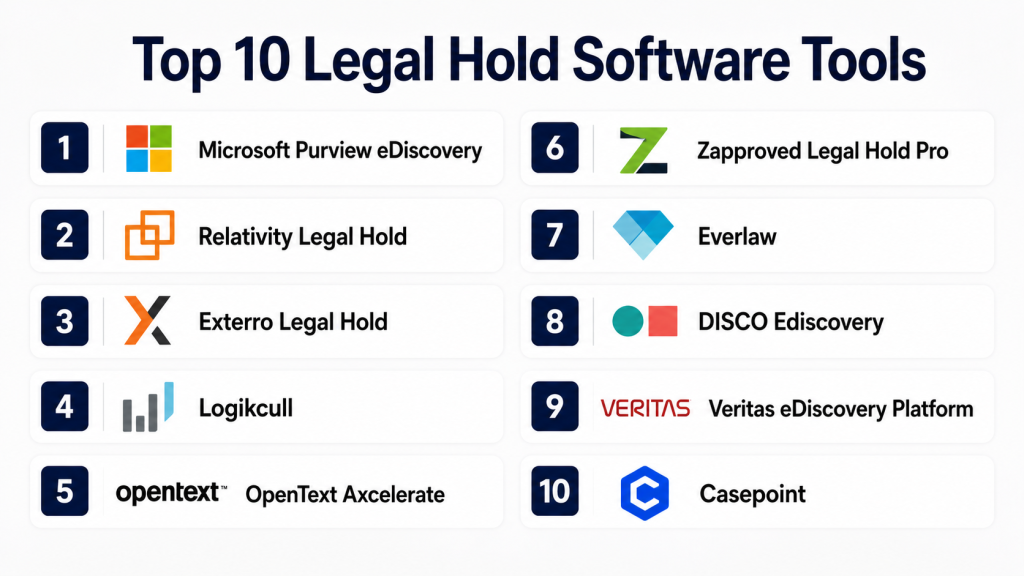
Top 10 Legal Hold Software Tools
1- Microsoft Purview eDiscovery
Short description: Microsoft Purview eDiscovery provides enterprise-grade legal hold and compliance capabilities tightly integrated with Microsoft 365. It is widely used by enterprises already standardized on Microsoft ecosystems.
Key Features
- Legal hold management for Microsoft 365 workloads
- Custodian and non-custodian hold workflows
- Advanced eDiscovery and content search
- Integration with Teams, Exchange, SharePoint, and OneDrive
- Audit logs and case management
- AI-assisted review and analytics
- Role-based access controls
Pros
- Strong integration with Microsoft environments
- Comprehensive compliance ecosystem
- Scalable for enterprise deployments
Cons
- Best suited for Microsoft-centric organizations
- Complex licensing structure
- Learning curve for advanced workflows
Platforms / Deployment
- Web
- Cloud
Security & Compliance
- SSO/SAML
- MFA
- Encryption
- Audit logs
- RBAC
- GDPR
- ISO 27001
- SOC 2
Integrations & Ecosystem
Microsoft Purview integrates deeply with Microsoft business and collaboration platforms, making it attractive for organizations already invested in Microsoft infrastructure.
- Microsoft Teams
- Exchange Online
- SharePoint
- OneDrive
- Defender ecosystem
- Power Platform
Support & Community
Strong enterprise support ecosystem with extensive documentation, partner network support, and global enterprise onboarding resources.
2- Relativity Legal Hold
Short description: Relativity Legal Hold is a mature legal hold solution focused on automation, defensibility, and enterprise-scale eDiscovery workflows.
Key Features
- Automated custodian communications
- Hold acknowledgment tracking
- Dynamic questionnaires
- Integrated eDiscovery workflows
- Audit-ready reporting
- Legal hold templates
- Preservation tracking
Pros
- Strong automation capabilities
- Enterprise-focused workflows
- Excellent audit tracking
Cons
- Premium pricing
- Can require specialized administration
- Better suited for large legal operations
Platforms / Deployment
- Web
- Cloud / Hybrid
Security & Compliance
- SSO/SAML
- MFA
- Encryption
- Audit logs
- RBAC
- GDPR
Integrations & Ecosystem
Relativity integrates with enterprise legal ecosystems and major cloud storage platforms to streamline litigation workflows.
- Microsoft 365
- Google Workspace
- Slack
- Box
- Enterprise archives
- API integrations
Support & Community
Strong enterprise support with a large legal technology ecosystem and experienced implementation partners.
3- Exterro Legal Hold
Short description: Exterro provides integrated legal hold, data privacy, and eDiscovery solutions designed for enterprise legal and compliance teams.
Key Features
- Automated legal hold notices
- Custodian compliance tracking
- Preservation workflow automation
- Integrated privacy management
- Reporting dashboards
- Multi-jurisdiction workflows
- AI-assisted legal operations
Pros
- Unified governance platform
- Strong compliance capabilities
- Good workflow automation
Cons
- Advanced features may require training
- Enterprise-focused pricing
- Complex deployments for smaller organizations
Platforms / Deployment
- Web
- Cloud / Hybrid
Security & Compliance
- SSO/SAML
- Encryption
- Audit logs
- RBAC
- GDPR
Integrations & Ecosystem
Exterro integrates with enterprise governance and legal operations systems for unified compliance management.
- Microsoft 365
- Slack
- ServiceNow
- Enterprise archives
- Cloud repositories
- API ecosystem
Support & Community
Professional onboarding services and enterprise-level customer support are strong differentiators.
4- Logikcull
Short description: Logikcull focuses on cloud-based eDiscovery and legal hold management with simplicity and usability aimed at legal teams and mid-sized organizations.
Key Features
- Cloud-native legal hold workflows
- Drag-and-drop document management
- Automated notifications
- Search and filtering tools
- Audit reporting
- Collaboration features
- Secure cloud preservation
Pros
- Easy to use interface
- Fast onboarding
- Lower operational complexity
Cons
- Less customization than enterprise-heavy tools
- Limited advanced governance features
- Best for mid-market use cases
Platforms / Deployment
- Web
- Cloud
Security & Compliance
- Encryption
- Audit logs
- RBAC
- SOC 2
Integrations & Ecosystem
Logikcull emphasizes usability while supporting common cloud collaboration and storage integrations.
- Microsoft 365
- Google Workspace
- Dropbox
- Box
- Slack
Support & Community
Well-regarded onboarding experience with responsive customer support and accessible training resources.
5- OpenText Axcelerate
Short description: OpenText Axcelerate combines legal hold, eDiscovery, and analytics capabilities for enterprises managing complex compliance environments.
Key Features
- Legal hold automation
- Advanced analytics
- AI-assisted review
- Data preservation controls
- Compliance reporting
- Workflow management
- Large-scale document review
Pros
- Strong enterprise scalability
- Mature compliance ecosystem
- Advanced analytics features
Cons
- Complex implementation
- Higher administrative overhead
- Premium enterprise pricing
Platforms / Deployment
- Web
- Cloud / Hybrid
Security & Compliance
- SSO/SAML
- MFA
- Encryption
- Audit logs
- RBAC
Integrations & Ecosystem
OpenText supports integrations across enterprise information management and legal operations systems.
- Microsoft 365
- Enterprise archives
- Document management platforms
- API integrations
- Cloud repositories
Support & Community
Enterprise-grade support with extensive consulting and implementation partner ecosystem.
6- Zapproved Legal Hold Pro
Short description: Zapproved Legal Hold Pro focuses specifically on simplifying legal hold workflows for corporate legal teams.
Key Features
- Automated legal hold issuance
- Custodian reminders
- Reporting dashboards
- Hold release management
- Centralized matter tracking
- Defensible audit trails
- Workflow templates
Pros
- User-friendly workflow design
- Strong legal hold specialization
- Efficient custodian tracking
Cons
- Narrower feature scope than broader governance suites
- Limited advanced analytics
- Enterprise customization may vary
Platforms / Deployment
- Web
- Cloud
Security & Compliance
- Encryption
- Audit logs
- RBAC
- SOC 2
Integrations & Ecosystem
Zapproved integrates with common legal and enterprise productivity platforms.
- Microsoft 365
- Slack
- Google Workspace
- eDiscovery systems
- API integrations
Support & Community
Known for focused customer support and legal operations onboarding guidance.
7- Everlaw
Short description: Everlaw is a modern cloud-native eDiscovery platform that includes legal hold management and collaborative investigation capabilities.
Key Features
- Legal hold tracking
- Collaborative document review
- AI-powered analytics
- Cloud-native workflows
- Search and review automation
- Case management
- Reporting and audit tools
Pros
- Modern user interface
- Strong analytics capabilities
- Collaborative workflows
Cons
- More focused on eDiscovery than standalone legal hold
- Enterprise pricing
- Some advanced governance capabilities may vary
Platforms / Deployment
- Web
- Cloud
Security & Compliance
- SSO/SAML
- MFA
- Encryption
- Audit logs
- SOC 2
Integrations & Ecosystem
Everlaw supports integrations with major enterprise communication and storage ecosystems.
- Microsoft 365
- Google Workspace
- Cloud storage platforms
- API integrations
- Enterprise review systems
Support & Community
Strong onboarding and training resources with growing enterprise adoption.
8- DISCO Ediscovery
Short description: DISCO provides AI-powered legal technology tools including legal hold, review automation, and eDiscovery management.
Key Features
- AI-assisted legal workflows
- Automated legal hold management
- Cloud-based document review
- Analytics dashboards
- Case collaboration
- Workflow automation
- Search optimization
Pros
- AI-focused platform capabilities
- Strong usability
- Efficient review workflows
Cons
- Premium pricing model
- Better suited for litigation-heavy organizations
- Some advanced compliance workflows may require customization
Platforms / Deployment
- Web
- Cloud
Security & Compliance
- Encryption
- Audit logs
- RBAC
- SOC 2
Integrations & Ecosystem
DISCO integrates with modern enterprise collaboration and legal review environments.
- Microsoft 365
- Slack
- Cloud storage systems
- API ecosystem
Support & Community
Good onboarding support with expanding enterprise legal technology community adoption.
9- Veritas eDiscovery Platform
Short description: Veritas offers enterprise-grade legal hold and eDiscovery capabilities with strong governance and archival integration.
Key Features
- Legal hold automation
- Enterprise archiving integration
- Data preservation workflows
- Search and collection tools
- Compliance reporting
- Multi-source discovery
- Audit management
Pros
- Strong archival ecosystem
- Enterprise-grade scalability
- Mature governance capabilities
Cons
- Traditional enterprise complexity
- Longer implementation cycles
- Can require dedicated administration
Platforms / Deployment
- Web
- Hybrid / Self-hosted
Security & Compliance
- SSO/SAML
- MFA
- Encryption
- Audit logs
- RBAC
Integrations & Ecosystem
Veritas integrates deeply with enterprise archival and data governance infrastructure.
- Enterprise Vault
- Microsoft 365
- File systems
- Email platforms
- Cloud repositories
Support & Community
Established enterprise support network with strong partner ecosystem.
10- Casepoint
Short description: Casepoint delivers cloud-based eDiscovery and legal hold solutions for enterprises, government agencies, and regulated sectors.
Key Features
- Legal hold management
- AI-assisted review
- Multi-cloud preservation
- Custodian management
- Analytics dashboards
- Workflow automation
- Compliance reporting
Pros
- Strong cloud-native architecture
- Good scalability
- Broad compliance workflows
Cons
- Enterprise-focused pricing
- Some advanced workflows require configuration
- Smaller community compared to larger vendors
Platforms / Deployment
- Web
- Cloud
Security & Compliance
- Encryption
- Audit logs
- RBAC
- SOC 2
Integrations & Ecosystem
Casepoint integrates with enterprise legal operations and cloud productivity ecosystems.
- Microsoft 365
- Google Workspace
- Cloud storage systems
- Enterprise repositories
- APIs
Support & Community
Provides enterprise onboarding, implementation support, and professional services assistance.
Comparison Table
| Tool Name | Best For | Platform(s) Supported | Deployment | Standout Feature | Public Rating |
|---|---|---|---|---|---|
| Microsoft Purview eDiscovery | Microsoft-centric enterprises | Web | Cloud | Native Microsoft integration | N/A |
| Relativity Legal Hold | Large legal operations | Web | Cloud / Hybrid | Advanced legal hold automation | N/A |
| Exterro Legal Hold | Compliance-heavy enterprises | Web | Cloud / Hybrid | Integrated governance workflows | N/A |
| Logikcull | Mid-market legal teams | Web | Cloud | Simplicity and usability | N/A |
| OpenText Axcelerate | Large-scale eDiscovery | Web | Cloud / Hybrid | Advanced analytics | N/A |
| Zapproved Legal Hold Pro | Corporate legal teams | Web | Cloud | Streamlined legal hold workflows | N/A |
| Everlaw | Collaborative legal review | Web | Cloud | Modern cloud-native experience | N/A |
| DISCO Ediscovery | AI-driven legal workflows | Web | Cloud | AI-assisted review | N/A |
| Veritas eDiscovery Platform | Enterprise governance | Web | Hybrid / Self-hosted | Deep archival integration | N/A |
| Casepoint | Regulated sectors | Web | Cloud | Multi-cloud preservation | N/A |
Evaluation & Scoring of Legal Hold Software
| Tool Name | Core (25%) | Ease (15%) | Integrations (15%) | Security (10%) | Performance (10%) | Support (10%) | Value (15%) | Weighted Total |
| Microsoft Purview eDiscovery | 9 | 7 | 10 | 9 | 9 | 8 | 7 | 8.5 |
| Relativity Legal Hold | 9 | 7 | 8 | 9 | 9 | 9 | 6 | 8.2 |
| Exterro Legal Hold | 8 | 7 | 8 | 8 | 8 | 8 | 7 | 7.8 |
| Logikcull | 7 | 9 | 7 | 8 | 7 | 8 | 8 | 7.7 |
| OpenText Axcelerate | 9 | 6 | 8 | 9 | 9 | 8 | 6 | 7.9 |
| Zapproved Legal Hold Pro | 8 | 8 | 7 | 8 | 8 | 8 | 8 | 7.9 |
| Everlaw | 8 | 9 | 7 | 8 | 8 | 8 | 7 | 7.9 |
| DISCO Ediscovery | 8 | 8 | 7 | 8 | 8 | 7 | 7 | 7.6 |
| Veritas eDiscovery Platform | 9 | 6 | 8 | 9 | 9 | 8 | 6 | 7.9 |
| Casepoint | 8 | 7 | 8 | 8 | 8 | 7 | 7 | 7.7 |
These scores are comparative rather than absolute. Enterprise-heavy platforms typically score higher in compliance depth and scalability, while mid-market solutions often perform better in usability and operational simplicity. Buyers should prioritize the categories most relevant to their legal, compliance, and IT requirements. A higher overall score does not automatically make a tool the right fit for every organization.
Which Legal Hold Software Tool Is Right for You?
Solo / Freelancer
Most solo professionals do not require enterprise legal hold platforms. Simpler cloud archive or document retention tools are usually sufficient unless dealing with regulated industries or frequent litigation.
SMB
SMBs often benefit from solutions like Logikcull or Zapproved because they provide simpler onboarding, lower operational complexity, and easier workflows without requiring dedicated compliance teams.
Mid-Market
Mid-market organizations typically need stronger automation and integrations. Everlaw, Exterro, and DISCO offer balanced functionality for growing legal and compliance operations.
Enterprise
Large enterprises managing complex litigation, multinational compliance, or large-scale investigations should evaluate Microsoft Purview, Relativity, OpenText, or Veritas.
Budget vs Premium
Budget-conscious organizations may prioritize usability and operational simplicity over advanced governance depth. Premium enterprise tools generally offer stronger automation, analytics, and scalability but require higher investment.
Feature Depth vs Ease of Use
Enterprise governance suites provide extensive capabilities but can involve steeper learning curves. Simpler cloud-native tools often improve adoption and reduce training overhead.
Integrations & Scalability
Organizations using Microsoft ecosystems should strongly evaluate Purview. Companies with complex archival or governance requirements may prefer Veritas or OpenText for scalability.
Security & Compliance Needs
Highly regulated sectors such as healthcare, finance, legal services, and government agencies should prioritize tools with mature audit logging, RBAC, encryption, and enterprise-grade compliance workflows.
Frequently Asked Questions FAQs
1- What is Legal Hold Software?
Legal Hold Software helps organizations preserve data and records during litigation, investigations, or compliance events. It automates notifications, tracking, preservation workflows, and audit reporting to reduce legal risks.
2- Why is legal hold management important?
Improper data preservation can lead to regulatory penalties, litigation risks, and reputational damage. Legal hold tools help organizations maintain defensible compliance processes.
3- Are legal hold tools only for large enterprises?
No. While enterprises are major users, mid-sized organizations and regulated SMBs also benefit from automated legal hold workflows and audit-ready documentation.
4- What integrations are most important?
Common integrations include Microsoft 365, Google Workspace, Slack, cloud storage platforms, archival systems, and eDiscovery tools.
5- How long does implementation usually take?
Cloud-native tools may be deployed in days or weeks, while enterprise governance platforms can require months depending on complexity and integration requirements.
6- Do these tools support remote and hybrid work environments?
Yes. Most modern legal hold platforms are cloud-based and designed to preserve communications across distributed collaboration systems.
7- What are common mistakes when selecting Legal Hold Software?
Organizations often underestimate integration complexity, reporting needs, scalability requirements, and governance workflow maturity.
8- Are AI features becoming important in legal hold platforms?
Yes. AI is increasingly used for custodian identification, review prioritization, analytics, workflow automation, and predictive compliance insights.
9- Can organizations switch legal hold platforms later?
Yes, but migration complexity depends on data volume, retention structures, and integration dependencies. Planning migration workflows carefully is important.
10- What is the difference between legal hold and eDiscovery?
Legal hold focuses on preserving relevant data, while eDiscovery covers collection, review, analysis, and production of evidence during legal proceedings.
Conclusion
Legal Hold Software has evolved from a simple notification system into a critical component of enterprise governance, compliance, and digital risk management. Modern organizations must preserve communications and records across cloud platforms, collaboration tools, endpoints, and distributed workforces while maintaining defensible audit trails and regulatory compliance. The right platform depends heavily on organizational size, litigation exposure, compliance obligations, existing infrastructure, and operational maturity. Microsoft Purview and Relativity remain strong choices for enterprise-scale governance, while Logikcull and Zapproved provide simpler workflows for mid-sized organizations. AI-assisted analytics, automation, and integrated compliance ecosystems are increasingly shaping buying decisions. Rather than searching for a universal winner, organizations should shortlist two or three platforms, validate integration compatibility, evaluate security controls, and run pilot programs before committing to large-scale deployment.
