Introduction
Customer Consent & Preferences Centers enable businesses to manage user consent, communication preferences, and data privacy choices in compliance with global regulations. These tools centralize consent management, making it easy to track, update, and enforce user preferences across multiple channels.
Why it matters now: With increasing data privacy regulations such as GDPR, CCPA, and emerging global privacy laws, organizations must maintain accurate consent records. Consent centers not only ensure compliance but also build customer trust, reduce legal risk, and improve marketing effectiveness by honoring user preferences.
Real-world use cases:
- Managing email, SMS, and push notification consent for marketing campaigns.
- Centralizing opt-in and opt-out preferences for website and app users.
- Tracking consent for data processing and analytics.
- Maintaining audit trails for regulatory compliance.
- Enabling customers to manage their privacy and communication choices easily.
Evaluation criteria for buyers:
- Support for multiple channels and touchpoints.
- Granular consent and preference management.
- Integration with CRM, marketing, and analytics platforms.
- Compliance with GDPR, CCPA, and other regulations.
- Ease of use and customer self-service experience.
- Reporting and audit capabilities.
- Security and access controls.
- Scalability and deployment flexibility.
Best for: Marketing teams, data privacy officers, and compliance departments in mid-market and enterprise organizations.
Not ideal for: Small businesses with minimal marketing communication channels or low regulatory exposure; simpler email preference tools may suffice.
Key Trends in Customer Consent & Preferences Centers
- AI-driven preference suggestions to improve engagement.
- Centralized consent management across digital and offline channels.
- Cloud-based deployment for scalability and flexibility.
- Granular tracking of opt-in/opt-out and communication channels.
- Integration with CRMs, marketing automation, and analytics platforms.
- Enhanced reporting and audit trail features for compliance.
- Real-time updates and automated consent enforcement.
- Focus on user experience for self-service portals.
- Privacy-by-design and default opt-in/opt-out frameworks.
- Modular pricing and SaaS subscription options for businesses of all sizes.
How We Selected These Tools (Methodology)
- Assessed market adoption among marketing, compliance, and data privacy teams.
- Evaluated feature completeness, including multi-channel consent and granular preference management.
- Reviewed integration capabilities with CRM, marketing, and analytics platforms.
- Verified security and compliance standards: GDPR, CCPA, SOC 2.
- Checked ease of use for both administrators and customers.
- Considered scalability for enterprise and mid-market needs.
- Analyzed reporting and audit features.
- Focused on tools offering automated workflows and AI enhancements.
- Balanced between enterprise, SMB, and self-service capabilities.
- Reviewed support and documentation quality.
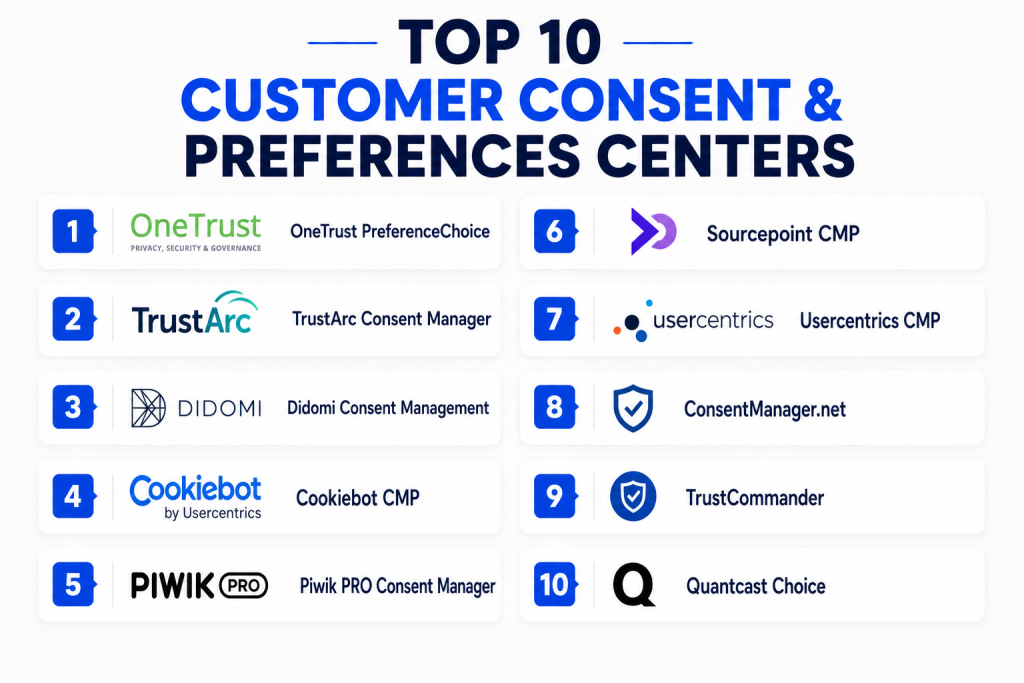
Top 10 Customer Consent & Preferences Centers
#1 — OneTrust PreferenceChoice
Short description: OneTrust PreferenceChoice centralizes consent management and enables granular preference controls for enterprises.
Key Features
- Multi-channel consent capture
- Granular preference management
- Audit logs and reporting
- Integration with CRM and marketing automation
- AI-assisted compliance suggestions
- Self-service portals for customers
- Automated enforcement of consent policies
Pros
- Comprehensive enterprise solution
- Strong compliance features
Cons
- Premium pricing
- Steep learning curve for smaller teams
Platforms / Deployment
- Web
- Cloud
Security & Compliance
- GDPR, CCPA, SOC 2, ISO 27001
Integrations & Ecosystem
- Salesforce, HubSpot, Marketo
- API for custom workflows
- BI platform connectors
Support & Community
- Enterprise support tiers
- Extensive documentation and training
#2 — TrustArc Consent Manager
Short description: TrustArc provides consent and preference management with automated compliance tracking.
Key Features
- Centralized consent repository
- Automated regulatory updates
- Multi-channel preference management
- Detailed reporting and audit trails
- Integration with analytics and marketing platforms
Pros
- Strong regulatory compliance support
- Easy-to-use dashboards
Cons
- Enterprise-focused pricing
- Limited SMB-targeted features
Platforms / Deployment
- Web
- Cloud
Security & Compliance
- GDPR, CCPA, SOC 2
Integrations & Ecosystem
- CRM platforms, Google Analytics
- API access for automation
Support & Community
- Documentation and knowledge base
- Customer support tiers
#3 — Didomi Consent Management
Short description: Didomi enables businesses to manage user consent and preferences across web, mobile, and email channels.
Key Features
- Multi-channel consent capture
- Preference centers with self-service portals
- API integrations for automation
- Real-time consent updates
- Audit trail and reporting
Pros
- User-friendly interface
- Real-time updates for compliance
Cons
- Some integrations require technical setup
- Pricing may be high for small teams
Platforms / Deployment
- Web / iOS / Android
- Cloud
Security & Compliance
- GDPR, CCPA
Integrations & Ecosystem
- Salesforce, HubSpot, Marketo
- API for custom workflows
Support & Community
- Documentation available
- Customer support and training
#4 — Cookiebot CMP
Short description: Cookiebot offers automated consent management and compliance tracking for websites.
Key Features
- Cookie consent and tracking
- Automated compliance monitoring
- Preference center for website visitors
- Reporting and audit trails
- Integration with CMS platforms
Pros
- Easy web deployment
- Automated compliance checks
Cons
- Focused primarily on cookies
- Limited enterprise features
Platforms / Deployment
- Web
- Cloud
Security & Compliance
- GDPR, CCPA
Integrations & Ecosystem
- WordPress, Drupal, Shopify
- API access for custom integrations
Support & Community
- Knowledge base and guides
- Email support
#5 — Piwik PRO Consent Manager
Short description: Piwik PRO provides privacy-focused analytics and consent management for data-driven enterprises.
Key Features
- Consent management for multiple channels
- Preference center customization
- Compliance dashboards and reporting
- Integration with analytics platforms
- API access for automation
Pros
- Strong privacy-focused features
- Easy integration with analytics
Cons
- Enterprise pricing
- Requires setup expertise
Platforms / Deployment
- Web
- Cloud / On-premises
Security & Compliance
- GDPR, HIPAA
Integrations & Ecosystem
- Piwik PRO Analytics, CRM systems
- API connectors
Support & Community
- Documentation and training
- Enterprise support tiers
#6 — Sourcepoint CMP
Short description: Sourcepoint offers consent and preference management focused on digital media and advertising compliance.
Key Features
- Multi-channel consent capture
- Preference center management
- Automated compliance updates
- Reporting and audit logs
- API integration
Pros
- Ideal for publishers and ad networks
- Automated compliance
Cons
- Focused on digital media
- Less suitable for SMBs outside publishing
Platforms / Deployment
- Web
- Cloud
Security & Compliance
- GDPR, CCPA
Integrations & Ecosystem
- Ad servers, analytics platforms
- API for automation
Support & Community
- Documentation and guides
- Customer support tiers
#7 — Usercentrics CMP
Short description: Usercentrics provides customizable consent management solutions with self-service preference centers.
Key Features
- Multi-channel consent capture
- Self-service preference portals
- Audit and compliance reporting
- API integration
- GDPR and CCPA compliance
Pros
- Highly customizable
- User-friendly interface
Cons
- Pricing may be high for small teams
- Enterprise-focused support
Platforms / Deployment
- Web
- Cloud
Security & Compliance
- GDPR, CCPA
Integrations & Ecosystem
- Salesforce, HubSpot, analytics platforms
- API support
Support & Community
- Documentation and training
- Enterprise support
#8 — ConsentManager.net
Short description: Offers consent and preference management for websites and mobile apps with automated compliance.
Key Features
- Cookie and consent management
- Preference centers
- Compliance reporting
- Multi-language support
- API integration
Pros
- Easy deployment for web and mobile
- Automated compliance updates
Cons
- Focused primarily on cookie consent
- Limited advanced enterprise features
Platforms / Deployment
- Web / iOS / Android
- Cloud
Security & Compliance
- GDPR, CCPA
Integrations & Ecosystem
- CMS platforms, marketing automation tools
- API access
Support & Community
- Documentation and guides
- Email support
#9 — TrustCommander
Short description: Centralized consent management platform for enterprises with automated preference tracking.
Key Features
- Multi-channel consent capture
- Preference center customization
- Compliance dashboards
- API integrations
- Reporting and audit logs
Pros
- Enterprise-ready
- Strong compliance focus
Cons
- Higher cost
- Less intuitive for smaller teams
Platforms / Deployment
- Web
- Cloud
Security & Compliance
- GDPR, CCPA, SOC 2
Integrations & Ecosystem
- CRM systems, marketing platforms
- API connectors
Support & Community
- Documentation and training
- Enterprise support tiers
#10 — Quantcast Choice
Short description: Provides consent management and preference centers optimized for digital advertising compliance.
Key Features
- Cookie and consent management
- Multi-channel preference centers
- Real-time compliance updates
- Reporting and audit trails
- API integration
Pros
- Optimized for advertisers and publishers
- Real-time enforcement
Cons
- Focused on digital media
- Enterprise pricing
Platforms / Deployment
- Web
- Cloud
Security & Compliance
- GDPR, CCPA
Integrations & Ecosystem
- Ad servers, analytics platforms
- API for integration
Support & Community
- Documentation and guides
- Customer support tiers
Comparison Table (Top 10)
| Tool Name | Best For | Platform(s) Supported | Deployment | Standout Feature | Public Rating |
|---|---|---|---|---|---|
| OneTrust PreferenceChoice | Enterprise marketers | Web | Cloud | Granular consent & preference management | N/A |
| TrustArc Consent Manager | Compliance teams | Web | Cloud | Automated regulatory updates | N/A |
| Didomi Consent Management | Multi-channel marketers | Web / iOS / Android | Cloud | Real-time consent updates | N/A |
| Cookiebot CMP | Website owners | Web | Cloud | Automated cookie compliance | N/A |
| Piwik PRO Consent Manager | Data-driven enterprises | Web | Cloud / On-premises | Privacy-focused analytics | N/A |
| Sourcepoint CMP | Publishers & advertisers | Web | Cloud | Digital media compliance | N/A |
| Usercentrics CMP | Enterprises | Web | Cloud | Customizable preference portals | N/A |
| ConsentManager.net | SMBs and websites | Web / iOS / Android | Cloud | Multi-language compliance | N/A |
| TrustCommander | Enterprises | Web | Cloud | Centralized consent & auditing | N/A |
| Quantcast Choice | Digital advertisers | Web | Cloud | Real-time enforcement | N/A |
Evaluation & Scoring of Customer Consent & Preferences Centers
| Tool Name | Core (25%) | Ease (15%) | Integrations (15%) | Security (10%) | Performance (10%) | Support (10%) | Value (15%) | Weighted Total (0–10) |
|---|---|---|---|---|---|---|---|---|
| OneTrust PreferenceChoice | 9 | 7 | 8 | 9 | 8 | 8 | 7 | 8.2 |
| TrustArc Consent Manager | 8 | 8 | 7 | 9 | 8 | 7 | 7 | 7.9 |
| Didomi Consent Management | 8 | 8 | 8 | 9 | 8 | 7 | 7 | 8.0 |
| Cookiebot CMP | 7 | 8 | 6 | 8 | 7 | 6 | 7 | 7.2 |
| Piwik PRO Consent Manager | 8 | 7 | 7 | 9 | 8 | 7 | 7 | 7.9 |
| Sourcepoint CMP | 8 | 7 | 7 | 9 | 8 | 7 | 7 | 7.9 |
| Usercentrics CMP | 8 | 8 | 8 | 9 | 8 | 7 | 7 | 8.0 |
| ConsentManager.net | 7 | 8 | 6 | 8 | 7 | 6 | 7 | 7.2 |
| TrustCommander | 8 | 7 | 7 | 9 | 8 | 7 | 7 | 7.9 |
| Quantcast Choice | 7 | 8 | 7 | 8 | 7 | 6 | 7 | 7.3 |
Interpretation: Weighted totals reflect balance of core features, integrations, security, and value. Higher scores indicate stronger all-around performance; selection depends on company size and use case.
Which Customer Consent & Preferences Center Tool Is Right for You?
Solo / Freelancer
ConsentManager.net or Cookiebot CMP provide easy setup, cost-effective compliance, and basic multi-channel consent management.
SMB
Didomi or Usercentrics CMP deliver scalable, user-friendly preference centers suitable for small teams and marketing workflows.
Mid-Market
TrustArc and Piwik PRO offer enterprise features, compliance dashboards, and audit trails for regulated mid-sized organizations.
Enterprise
OneTrust PreferenceChoice, Sourcepoint, or TrustCommander deliver robust compliance, multi-channel coverage, and AI-enhanced consent management.
Budget vs Premium
SMBs can use Cookiebot or ConsentManager.net for cost efficiency. Enterprises often require premium tools for full-scale compliance and automation.
Feature Depth vs Ease of Use
Platforms like OneTrust provide extensive features but require training, while Didomi emphasizes usability with strong core capabilities.
Integrations & Scalability
Ensure compatibility with CRM, marketing automation, and analytics tools. Cloud deployment offers scalability; hybrid or on-prem options offer flexibility.
Security & Compliance Needs
Enterprises handling regulated data should prioritize GDPR, CCPA, SOC 2, and HIPAA-compliant tools such as OneTrust, Piwik PRO, or TrustCommander.
Frequently Asked Questions (FAQs)
1. What is a Customer Consent & Preferences Center?
A platform to manage user consent, communication preferences, and privacy choices across channels, ensuring regulatory compliance.
2. Which businesses benefit most?
Organizations with multi-channel marketing, regulated industries, and large customer bases gain the most.
3. Can SMBs afford these tools?
Yes, mid-tier cloud solutions like Didomi or ConsentManager.net provide scalable pricing for small businesses.
4. Do these tools track multiple channels?
Yes, leading platforms manage web, mobile, email, and push notifications across campaigns.
5. How do these tools ensure compliance?
By providing audit logs, reporting, and real-time enforcement of GDPR, CCPA, and other regulations.
6. Can these tools integrate with CRM and marketing platforms?
Yes, most tools integrate with Salesforce, HubSpot, Marketo, and analytics platforms.
7. Is setup complicated?
It varies; enterprise platforms require configuration, while SMB-focused tools are more plug-and-play.
8. Can customers manage their preferences?
Yes, self-service portals allow customers to view, update, or withdraw consent easily.
9. Do these tools support multi-language audiences?
Many platforms offer multi-language consent banners and preference portals for global compliance.
10. How often should consent policies be updated?
Regularly, especially when new regulations emerge or marketing channels are added.
Conclusion
Selecting the right Customer Consent & Preferences Center depends on business size, regulatory exposure, and communication complexity. SMBs can focus on ease-of-use and cost, while enterprises prioritize automation, multi-channel coverage, and compliance. Start by shortlisting 2–3 platforms, pilot implementation, validate consent records, and scale to maintain regulatory compliance while improving customer trust and engagement.
