Introduction
Competitive intelligence platforms are specialized tools that help businesses monitor, analyze, and act on competitor activities, market trends, and industry insights. These platforms provide data-driven insights to inform strategic decisions, optimize pricing, identify market opportunities, and improve overall competitiveness.
Use cases include tracking competitor product launches, analyzing marketing campaigns, monitoring pricing and promotions, identifying emerging trends, benchmarking performance, and generating actionable reports for executive decision-making. Buyers should evaluate platforms based on data sources, automation, analytics and reporting, integration capabilities, ease of use, scalability, alerts, collaboration features, security, and customer support.
Best for: Enterprises, SMBs, product managers, marketing teams, and strategy analysts seeking to gain actionable insights into competitors and market trends.
Not ideal for: Companies with minimal competitive activity or organizations without sufficient data infrastructure to leverage insights effectively.
Key Trends in Competitive Intelligence Platforms
- AI-powered trend analysis and competitor prediction
- Automated alerts for competitor activity and market changes
- Integration with CRM, ERP, and BI tools
- Real-time dashboards for actionable insights
- Social media and online monitoring for brand reputation
- Market share and pricing analytics
- Cloud-based SaaS deployments with API access
- Collaboration tools for cross-team sharing
- Multi-market and multi-language monitoring
- Data visualization for decision-making
How We Selected These Tools (Methodology)
- Market adoption and active user base
- Feature completeness including monitoring, analytics, and alerts
- Reliability and uptime performance
- Security and compliance measures
- Integration capabilities with BI, CRM, and marketing platforms
- Customer support quality and onboarding resources
- Pricing transparency and scalability
- Automation and predictive analytics features
- Collaboration and reporting capabilities
- Balance of tools suitable for SMBs and enterprise organizations
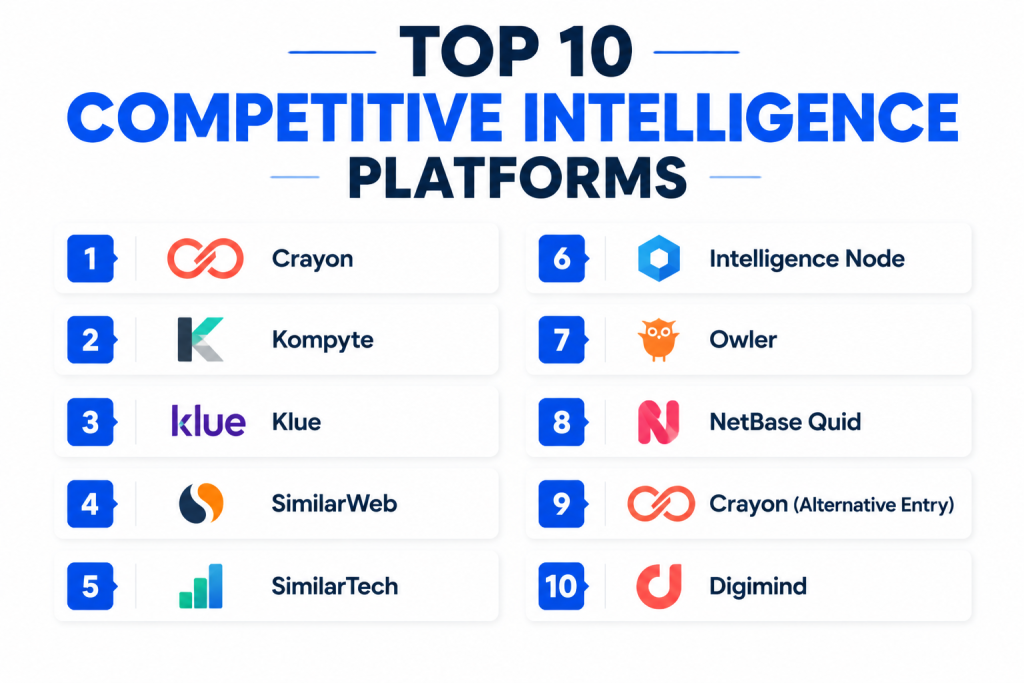
Top 10 Competitive Intelligence Platforms
#1 — Crayon
Short description: Crayon tracks competitors’ digital footprints, providing insights on marketing, sales, and product changes.
Key Features
- Competitor website and digital monitoring
- Alerts for product, pricing, and marketing changes
- Analytics dashboards for trends
- Integration with CRM and sales tools
- Collaboration features for teams
Pros
- Comprehensive competitor coverage
- Real-time alerts
- Easy-to-use dashboards
Cons
- Higher pricing for small businesses
- Requires setup and training
Platforms / Deployment
- Web
- Cloud
Security & Compliance
- Secure data handling
- Not publicly stated
Integrations & Ecosystem
- Salesforce, HubSpot, Slack
- API available for custom workflows
Support & Community
- Knowledge base, tutorials
- Email and chat support
#2 — Kompyte
Short description: Kompyte automates competitor monitoring, tracking websites, social media, and digital campaigns.
Key Features
- Real-time competitor tracking
- Automated alerts for changes
- Analytics dashboards
- Social media monitoring
- Integration with CRM and marketing platforms
Pros
- Automated competitor insights
- Multi-channel monitoring
- Scalable for SMBs and enterprises
Cons
- Interface may require training
- Limited historical data
Platforms / Deployment
- Web
- Cloud
Security & Compliance
- Payment and data encryption
- Not publicly stated
Integrations & Ecosystem
- Salesforce, HubSpot, Slack
- API for workflow automation
Support & Community
- Email support and tutorials
- Knowledge base
#3 — Klue
Short description: Klue helps businesses centralize competitive intelligence, tracking products, marketing, and industry news.
Key Features
- Centralized CI repository
- Automated alerts for competitor updates
- Analytics dashboards and reporting
- Collaboration tools
- Integration with CRM and BI platforms
Pros
- Enterprise-grade features
- Team collaboration support
- Automated data collection
Cons
- Pricing may be high for SMBs
- Setup requires training
Platforms / Deployment
- Web
- Cloud
Security & Compliance
- Secure data handling
- Not publicly stated
Integrations & Ecosystem
- Salesforce, HubSpot, Power BI
- API for custom workflows
Support & Community
- Knowledge base and tutorials
- Email and chat support
#4 — SimilarWeb
Short description: SimilarWeb provides website analytics and market intelligence, helping businesses understand competitor performance.
Key Features
- Competitor website traffic analytics
- Industry benchmarks
- Market trends and insights
- Exportable reports
- Integration with analytics tools
Pros
- Extensive digital market data
- Benchmarking against competitors
- Easy-to-use dashboards
Cons
- Limited on non-digital channels
- Higher-tier features are expensive
Platforms / Deployment
- Web
- Cloud
Security & Compliance
- Secure data handling
- Not publicly stated
Integrations & Ecosystem
- Google Analytics, Salesforce
- API for reporting
Support & Community
- Email support and knowledge base
#5 — SimilarTech
Short description: SimilarTech tracks competitor technology stacks and digital adoption across websites.
Key Features
- Competitor technology monitoring
- Market insights and analytics
- Alerts for changes in competitor stacks
- Integration with CRM tools
- Reports and dashboards
Pros
- Detailed technology insights
- Helps identify market trends
- Scalable for multiple websites
Cons
- Limited pricing insights
- Data primarily focused on tech stacks
Platforms / Deployment
- Web
- Cloud
Security & Compliance
- Secure data handling
- Not publicly stated
Integrations & Ecosystem
- Salesforce, HubSpot
- API available
Support & Community
- Knowledge base and tutorials
- Email support
#6 — Intelligence Node
Short description: Intelligence Node provides pricing and assortment intelligence for retail and e-commerce businesses.
Key Features
- Competitor pricing analysis
- Product assortment tracking
- AI-driven recommendations
- Alerts for market changes
- Integration with e-commerce platforms
Pros
- Optimizes pricing and assortment
- AI-driven insights
- Scalable for large retailers
Cons
- Setup may be complex
- Pricing may be high for SMBs
Platforms / Deployment
- Web
- Cloud
Security & Compliance
- Data encryption
- Not publicly stated
Integrations & Ecosystem
- Shopify, Magento, Salesforce
- API for automation
Support & Community
- Knowledge base and email support
#7 — Owler
Short description: Owler offers competitive insights including company news, funding, and executive movements.
Key Features
- Competitor news monitoring
- Market trend analysis
- Alerts for significant company events
- Analytics dashboards
- Social and news tracking
Pros
- Tracks broad market trends
- Provides actionable insights
- Alerts for competitor activities
Cons
- Limited product and pricing data
- Less suitable for real-time digital monitoring
Platforms / Deployment
- Web
- Cloud
Security & Compliance
- Secure data handling
- Not publicly stated
Integrations & Ecosystem
- CRM integrations
- API for reporting
Support & Community
- Knowledge base
- Email support
#8 — NetBase Quid
Short description: NetBase Quid provides market and competitor intelligence using AI-driven social analytics.
Key Features
- Social media monitoring
- Competitor sentiment analysis
- Market trend dashboards
- Alerts for competitor activity
- Integration with BI tools
Pros
- AI-driven insights
- Real-time social monitoring
- Advanced reporting
Cons
- High pricing
- Requires training to use analytics effectively
Platforms / Deployment
- Web
- Cloud
Security & Compliance
- Secure data handling
- Not publicly stated
Integrations & Ecosystem
- Power BI, Salesforce
- API for automation
Support & Community
- Email support
- Knowledge base
#9 — Crayon (Alternative Entry)
Short description: Crayon also provides digital footprint tracking for competitive intelligence and market insights.
Key Features
- Competitor website and marketing tracking
- Alerts for significant changes
- Collaboration tools for teams
- Analytics dashboards
- Integration with CRM
Pros
- Real-time insights
- Easy collaboration for teams
- Broad coverage of competitor activities
Cons
- Premium pricing
- Requires setup
Platforms / Deployment
- Web
- Cloud
Security & Compliance
- Data encryption
- Not publicly stated
Integrations & Ecosystem
- Salesforce, HubSpot
- API for custom workflows
Support & Community
- Knowledge base
- Email support
#10 — Digimind
Short description: Digimind provides market intelligence and competitive insights for global brands.
Key Features
- Competitor monitoring
- Market trend analysis
- Alerts for strategic changes
- Analytics dashboards
- Integration with BI tools
Pros
- Comprehensive global intelligence
- Advanced analytics and dashboards
- Scalable for enterprises
Cons
- Pricing may be high for SMBs
- Setup requires technical expertise
Platforms / Deployment
- Web
- Cloud
Security & Compliance
- Data encryption
- Not publicly stated
Integrations & Ecosystem
- Salesforce, Power BI
- API available
Support & Community
- Email support
- Knowledge base
Comparison Table
| Tool Name | Best For | Platform(s) Supported | Deployment | Standout Feature | Public Rating |
|---|---|---|---|---|---|
| Crayon | Multi-industry | Web | Cloud | Digital footprint tracking | N/A |
| Kompyte | SMB & enterprise | Web | Cloud | Automated competitor alerts | N/A |
| Klue | Enterprise | Web | Cloud | Centralized CI repository | N/A |
| SimilarWeb | Digital insights | Web | Cloud | Website analytics | N/A |
| SimilarTech | Tech stack insights | Web | Cloud | Technology monitoring | N/A |
| Intelligence Node | Retail & e-commerce | Web | Cloud | Pricing & assortment insights | N/A |
| Owler | Broad market tracking | Web | Cloud | News & executive updates | N/A |
| NetBase Quid | Social analytics | Web | Cloud | AI-driven social insights | N/A |
| Crayon (Alt) | Digital marketing | Web | Cloud | Marketing monitoring | N/A |
| Digimind | Global brands | Web | Cloud | Market intelligence | N/A |
Evaluation & Scoring
| Tool Name | Core (25%) | Ease (15%) | Integrations (15%) | Security (10%) | Performance (10%) | Support (10%) | Value (15%) | Weighted Total |
|---|---|---|---|---|---|---|---|---|
| Crayon | 9 | 8 | 8 | 8 | 9 | 8 | 7 | 8.2 |
| Kompyte | 8 | 7 | 8 | 7 | 8 | 7 | 7 | 7.5 |
| Klue | 9 | 7 | 8 | 8 | 9 | 8 | 7 | 8.0 |
| SimilarWeb | 8 | 8 | 7 | 7 | 8 | 7 | 7 | 7.5 |
| SimilarTech | 8 | 7 | 7 | 7 | 8 | 7 | 7 | 7.4 |
| Intelligence Node | 8 | 7 | 7 | 7 | 8 | 7 | 7 | 7.4 |
| Owler | 7 | 8 | 7 | 7 | 7 | 7 | 7 | 7.1 |
| NetBase Quid | 9 | 7 | 8 | 8 | 9 | 8 | 7 | 8.0 |
| Crayon (Alt) | 9 | 8 | 8 | 8 | 9 | 8 | 7 | 8.2 |
| Digimind | 9 | 7 | 8 | 8 | 9 | 8 | 7 | 8.0 |
Which Competitive Intelligence Platform Is Right for You?
Solo / Freelancer
- Owler, SimilarTech, Crayon (Alt) for easy setup and affordable insights
SMB
- Kompyte, SimilarWeb, Intelligence Node for multi-channel monitoring
Mid-Market
- SimilarWeb, Klue, NetBase Quid for analytics-driven strategy
Enterprise
- Klue, Digimind, NetBase Quid for large-scale, global intelligence
Budget vs Premium
- Owler and SimilarTech for budget-friendly; Klue, Digimind, NetBase Quid for premium features
Feature Depth vs Ease of Use
- Klue and NetBase Quid for advanced analytics; Owler and SimilarTech prioritize simplicity
Integrations & Scalability
- Klue, NetBase Quid, Digimind support enterprise integrations and scaling
Security & Compliance Needs
- All platforms provide secure data handling; enterprise tools offer advanced compliance and reporting
Frequently Asked Questions (FAQs)
1 — What is a competitive intelligence platform?
A tool that collects, analyzes, and delivers insights on competitor activity, market trends, and industry developments.
2 — Can these tools monitor multiple competitors?
Yes, all top platforms track multiple competitors and markets simultaneously.
3 — Are these platforms suitable for SMBs?
Yes, several platforms offer affordable tiers with essential features for smaller businesses.
4 — Can I automate alerts for competitor actions?
Yes, automated alerts are standard to notify users of product, marketing, or pricing changes.
5 — Do these platforms integrate with CRM or ERP?
Most provide integration with Salesforce, HubSpot, and ERP systems for actionable insights.
6 — Can I track digital marketing activities?
Yes, platforms like Crayon, Kompyte, and Klue monitor websites, social media, and campaigns.
7 — Are these tools real-time?
Many offer real-time alerts and dashboards, though some data may be updated periodically.
8 — Can I export reports?
Yes, most platforms allow exporting analytics reports for strategic decision-making.
9 — How long does setup take?
Setup varies from a few hours to a few days depending on data sources and integrations.
10 — Which platform is best for beginners?
Owler, SimilarTech, and Crayon (Alt) are ideal due to simple setup and usability.
Conclusion
Competitive intelligence platforms provide actionable insights to monitor competitors, analyze market trends, and optimize business strategies. Selection depends on company size, integration needs, and depth of analysis required. SMBs benefit from simple, affordable platforms, while enterprises require scalable, AI-powered tools for global intelligence. Shortlist 2–3 platforms, test data coverage, and analyze insights to make informed strategic decisions.
