Introduction
Rail Operations Management Software is designed to help railway operators efficiently plan, monitor, and optimize train movements, infrastructure usage, crew scheduling, and maintenance activities. These platforms replace manual coordination and fragmented systems with centralized, data-driven control—enabling smoother rail operations across freight and passenger networks.
As rail networks expand and modernize, the need for intelligent, secure, and scalable software is more critical than ever. With increasing demand for real-time visibility, predictive maintenance, and strict safety compliance, modern rail software now incorporates AI-driven analytics, cybersecurity frameworks, identity management, and access control mechanisms to ensure reliable and safe operations.
Common use cases include:
- Train scheduling and dispatch optimization
- Real-time train tracking and control
- Infrastructure and asset management
- Crew planning and workforce allocation
- Maintenance scheduling and predictive analytics
What buyers should evaluate:
- Real-time monitoring capabilities
- Integration with signaling and control systems
- Security features such as RBAC and MFA
- Scalability for large rail networks
- Data analytics and reporting features
- Ease of use for operations teams
- Compliance with rail safety standards
- Vendor reliability and support quality
Best for: National rail operators, metro systems, freight rail companies, and large transportation networks.
Not ideal for: Small logistics businesses or organizations without direct rail infrastructure responsibilities.
Key Trends in Rail Operations Management Software
- AI-driven scheduling optimization improving train punctuality
- Predictive maintenance reducing equipment failures
- Cloud-based deployment models replacing legacy systems
- Cybersecurity enhancements with Zero Trust architectures
- Digital twins for rail infrastructure simulation
- Integration with IoT sensors for real-time asset monitoring
- Automation in dispatch and signaling systems
- Advanced analytics dashboards for decision-making
- Mobile accessibility for field teams and operators
- Sustainability tracking for energy efficiency and emissions
How We Evaluate Rail Operations Management Software (Methodology)
- Market adoption and global presence
- Feature completeness across operations and maintenance
- System performance and reliability
- Security capabilities including identity and access management
- Integration with rail infrastructure and enterprise systems
- Vendor ecosystem and long-term viability
- Ease of deployment and onboarding
- Suitability for different rail network sizes
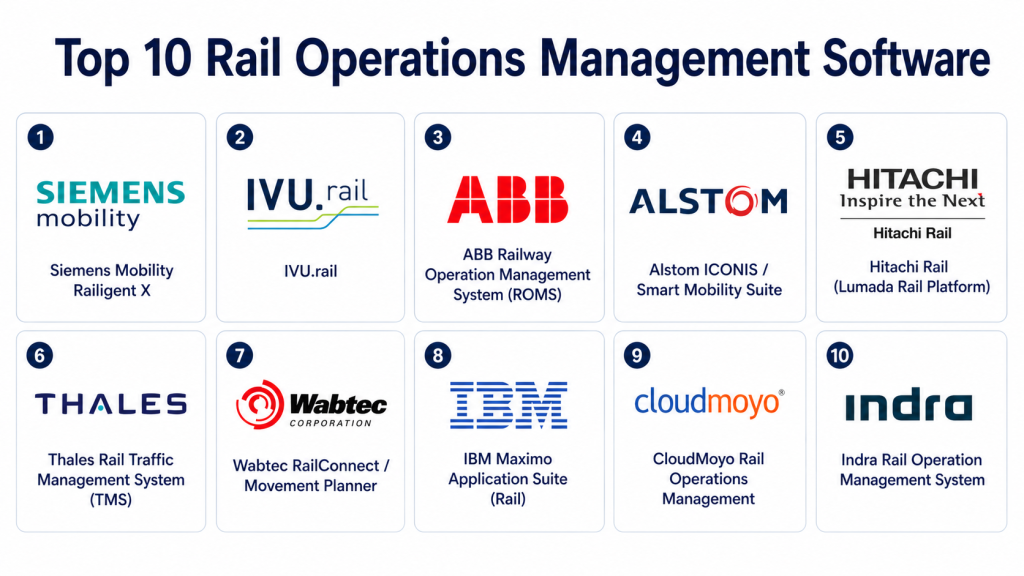
Top 10 Rail Operations Management Software
#1 — Siemens Railigent
Short description:
Siemens Railigent is an advanced rail analytics and operations platform designed to optimize rail performance using real-time data and predictive insights. It integrates operational data from trains, infrastructure, and maintenance systems to provide a unified view of rail operations. Railigent is widely used by large rail operators and infrastructure managers. It focuses on improving reliability, reducing downtime, and enhancing passenger experience. The platform supports digital transformation initiatives in rail networks.
Key Features
- Real-time monitoring and analytics
- Predictive maintenance tools
- Asset performance tracking
- Data integration across systems
- AI-based insights
- Centralized dashboard
Pros
- Strong analytics capabilities
- Enterprise-grade scalability
Cons
- High implementation complexity
- Premium pricing
Platforms / Deployment
Cloud / Hybrid
Security & Compliance
SSO, RBAC, encryption; certifications not publicly stated
Integrations & Ecosystem
Railigent integrates with signaling systems, ERP platforms, and IoT devices to enable comprehensive data analysis.
- IoT sensors
- ERP systems
- Maintenance systems
- Signaling platforms
Support & Community
Enterprise support with structured onboarding; documentation available
#2 — Hitachi Rail Digital Asset Management
Short description:
Hitachi Rail’s solution provides end-to-end asset and operations management for rail networks. It focuses on infrastructure optimization and predictive maintenance. The platform is designed for large-scale rail operators. It enables real-time insights and improves operational efficiency. It supports digital transformation across rail ecosystems.
Key Features
- Asset lifecycle management
- Predictive maintenance
- Real-time monitoring
- Data analytics
- Infrastructure optimization
Pros
- Strong asset management capabilities
- Reliable performance
Cons
- Complex deployment
- Limited flexibility for smaller operators
Platforms / Deployment
Cloud / Hybrid
Security & Compliance
Access control, encryption; other details not publicly stated
Integrations & Ecosystem
Integrates with rail infrastructure and enterprise systems.
- Asset systems
- ERP
- IoT platforms
Support & Community
Enterprise-level support; onboarding assistance
#3 — Alstom Smart Mobility Suite
Short description:
Alstom Smart Mobility Suite is a comprehensive platform for rail operations, focusing on scheduling, traffic management, and passenger experience. It integrates various rail functions into a unified system. The platform supports both freight and passenger networks. It is widely used by global rail operators. It enhances operational efficiency and safety.
Key Features
- Traffic management systems
- Scheduling optimization
- Real-time monitoring
- Passenger information systems
- Data analytics
Pros
- Comprehensive feature set
- Strong global adoption
Cons
- High cost
- Complex implementation
Platforms / Deployment
Cloud / Hybrid
Security & Compliance
RBAC, encryption; certifications not publicly stated
Integrations & Ecosystem
Integrates with rail systems and third-party platforms.
- Signaling systems
- ERP
- Passenger systems
Support & Community
Strong enterprise support and training programs
#4 — Wabtec RailConnect
Short description:
Wabtec RailConnect is a digital platform for rail operations and asset monitoring. It provides real-time insights and predictive analytics. The platform is designed for freight and passenger rail operators. It enhances efficiency and reduces downtime. It supports data-driven decision-making.
Key Features
- Real-time tracking
- Predictive analytics
- Asset monitoring
- Data integration
- Performance dashboards
Pros
- Strong analytics
- Reliable system
Cons
- Limited customization
- Requires training
Platforms / Deployment
Cloud
Security & Compliance
Encryption, access control; other details not publicly stated
Integrations & Ecosystem
Integrates with rail and logistics systems.
- IoT sensors
- ERP
- Logistics platforms
Support & Community
Enterprise support; documentation available
#5 — IBM Maximo for Rail
Short description:
IBM Maximo is a widely used asset management platform adapted for rail operations. It focuses on maintenance, asset tracking, and operational efficiency. It is suitable for large enterprises managing complex rail infrastructure. The platform supports predictive maintenance and analytics. It enhances reliability and reduces operational costs.
Key Features
- Asset management
- Predictive maintenance
- Work order management
- Data analytics
- Reporting tools
Pros
- Highly customizable
- Strong ecosystem
Cons
- Complex setup
- Requires skilled resources
Platforms / Deployment
Cloud / On-premise
Security & Compliance
SSO, RBAC, encryption; certifications not publicly stated
Integrations & Ecosystem
Integrates with enterprise and rail systems.
- ERP
- IoT
- Maintenance systems
Support & Community
Large community; enterprise support
#6 — Trimble Rail Solutions
Short description:
Trimble Rail Solutions provides software for rail asset management, inspection, and operations. It focuses on improving efficiency and safety. The platform supports real-time data collection and analysis. It is suitable for rail infrastructure operators. It enhances operational visibility and decision-making.
Key Features
- Asset tracking
- Inspection tools
- Data analytics
- Real-time monitoring
- Reporting
Pros
- Easy to use
- Strong field capabilities
Cons
- Limited enterprise features
- Integration challenges
Platforms / Deployment
Cloud
Security & Compliance
Access control, encryption; other details not publicly stated
Integrations & Ecosystem
Integrates with field and enterprise systems.
- Mobile tools
- ERP
- IoT
Support & Community
Moderate support; documentation available
#7 — Bentley Rail Track Systems
Short description:
Bentley provides rail engineering and operations tools focused on infrastructure management. It supports digital twins and advanced analytics. The platform is widely used in rail design and operations. It improves planning and maintenance. It enhances infrastructure performance.
Key Features
- Digital twin technology
- Infrastructure modeling
- Data analytics
- Maintenance planning
- Reporting tools
Pros
- Advanced modeling
- Strong engineering tools
Cons
- Steep learning curve
- High cost
Platforms / Deployment
Cloud / Desktop
Security & Compliance
Encryption; other details not publicly stated
Integrations & Ecosystem
Integrates with engineering and rail systems.
- CAD tools
- ERP
- Analytics platforms
Support & Community
Strong community; enterprise support
#8 — Thales Rail Traffic Management
Short description:
Thales provides advanced traffic management systems for rail operations. It focuses on safety, reliability, and efficiency. The platform supports real-time control and monitoring. It is suitable for large rail networks. It enhances operational performance and reduces delays.
Key Features
- Traffic management
- Real-time monitoring
- Safety systems
- Data analytics
- Control systems
Pros
- High reliability
- Strong safety features
Cons
- Complex implementation
- High cost
Platforms / Deployment
Cloud / On-premise
Security & Compliance
Access control, encryption; certifications not publicly stated
Integrations & Ecosystem
Integrates with signaling and control systems.
- Rail infrastructure
- Control systems
- ERP
Support & Community
Enterprise support; training programs
#9 — Indra Rail Solutions
Short description:
Indra provides digital solutions for rail operations, focusing on traffic management and control. It supports real-time monitoring and analytics. The platform is used by global rail operators. It enhances efficiency and safety. It supports digital transformation initiatives.
Key Features
- Traffic control
- Real-time monitoring
- Analytics tools
- Data integration
- Reporting
Pros
- Strong global presence
- Reliable performance
Cons
- Limited flexibility
- Complex deployment
Platforms / Deployment
Cloud / Hybrid
Security & Compliance
Encryption, RBAC; certifications not publicly stated
Integrations & Ecosystem
Integrates with rail and enterprise systems.
- Control systems
- ERP
- Analytics
Support & Community
Enterprise support; documentation available
#10 — Huawei Smart Rail Solution
Short description:
Huawei Smart Rail Solution offers a digital platform for rail operations, focusing on connectivity and analytics. It integrates communication systems with operational data. The platform enhances efficiency and reliability. It is suitable for modern rail networks. It supports smart transportation initiatives.
Key Features
- Connectivity solutions
- Data analytics
- Real-time monitoring
- Infrastructure integration
- Smart rail features
Pros
- Strong technology stack
- Scalable solution
Cons
- Regulatory concerns in some regions
- Integration complexity
Platforms / Deployment
Cloud / Hybrid
Security & Compliance
Access control, encryption; other details not publicly stated
Integrations & Ecosystem
Integrates with telecom and rail systems.
- Communication networks
- ERP
- IoT
Support & Community
Enterprise support; global presence
Comparison Table (Top 10)
| Tool | Best For | Platforms | Deployment | Standout Feature | Rating |
|---|---|---|---|---|---|
| Siemens Railigent | Large rail networks | Web | Cloud/Hybrid | Predictive analytics | N/A |
| Hitachi Rail | Asset management | Web | Cloud/Hybrid | Asset lifecycle | N/A |
| Alstom Suite | Passenger systems | Web | Cloud/Hybrid | Mobility integration | N/A |
| Wabtec | Freight rail | Web | Cloud | Real-time tracking | N/A |
| IBM Maximo | Enterprise asset mgmt | Web | Cloud/On-prem | Customization | N/A |
| Trimble | Field operations | Web/Mobile | Cloud | Inspection tools | N/A |
| Bentley | Infrastructure | Desktop/Web | Cloud | Digital twins | N/A |
| Thales | Traffic mgmt | Web | Cloud/On-prem | Safety systems | N/A |
| Indra | Global rail ops | Web | Cloud/Hybrid | Control systems | N/A |
| Huawei | Smart rail | Web | Cloud/Hybrid | Connectivity | N/A |
Evaluation & Scoring
| Tool | Core | Ease | Integration | Security | Performance | Support | Value | Total |
|---|---|---|---|---|---|---|---|---|
| Siemens | 9 | 6 | 8 | 8 | 9 | 8 | 6 | 8.0 |
| Hitachi | 8 | 6 | 7 | 8 | 8 | 7 | 6 | 7.5 |
| Alstom | 9 | 6 | 8 | 8 | 9 | 8 | 6 | 8.1 |
| Wabtec | 8 | 7 | 7 | 7 | 8 | 7 | 7 | 7.5 |
| IBM | 9 | 6 | 9 | 8 | 8 | 9 | 6 | 8.2 |
| Trimble | 7 | 8 | 6 | 7 | 7 | 7 | 8 | 7.4 |
| Bentley | 8 | 6 | 7 | 7 | 8 | 7 | 6 | 7.4 |
| Thales | 9 | 6 | 8 | 9 | 9 | 8 | 6 | 8.3 |
| Indra | 8 | 6 | 7 | 7 | 8 | 7 | 6 | 7.3 |
| Huawei | 8 | 7 | 8 | 7 | 8 | 7 | 7 | 7.6 |
Which Rail Software Is Right for You?
- SMB: Trimble
- Mid-Market: Wabtec, Indra
- Enterprise: Siemens, Alstom, Thales
- Best Value: Trimble
- Best Features: Siemens, IBM
- Best Security: Thales
FAQs
What is rail operations software?
It manages train scheduling, tracking, and infrastructure.
How much does it cost?
Varies widely; enterprise pricing dominates.
Is it secure?
Yes, with encryption and access control.
Does it support real-time data?
Yes, most platforms offer real-time insights.
Is it scalable?
Yes, especially enterprise solutions.
Conclusion
Rail Operations Management Software is essential for modern rail networks aiming to improve efficiency, safety, and scalability. These platforms bring together scheduling, asset management, and real-time monitoring into a unified system, enabling better coordination across complex rail ecosystems. With the rise of AI, predictive analytics, and digital twins, rail operators can now anticipate issues before they occur and optimize performance at every level.
Choosing the right solution depends heavily on your operational scale and technical requirements. Large enterprises may benefit from comprehensive platforms like Siemens Railigent or Alstom Smart Mobility, while smaller operators may prefer simpler, more flexible tools like Trimble. Integration capabilities, security features, and ease of deployment should be key decision factors when evaluating options.
To move forward, identify your core operational challenges, shortlist two or three platforms, and run pilot implementations. Validate integration with your existing systems and assess usability for your teams. A well-selected rail operations platform can significantly enhance reliability, reduce costs, and future-proof your rail infrastructure in an increasingly digital world.
