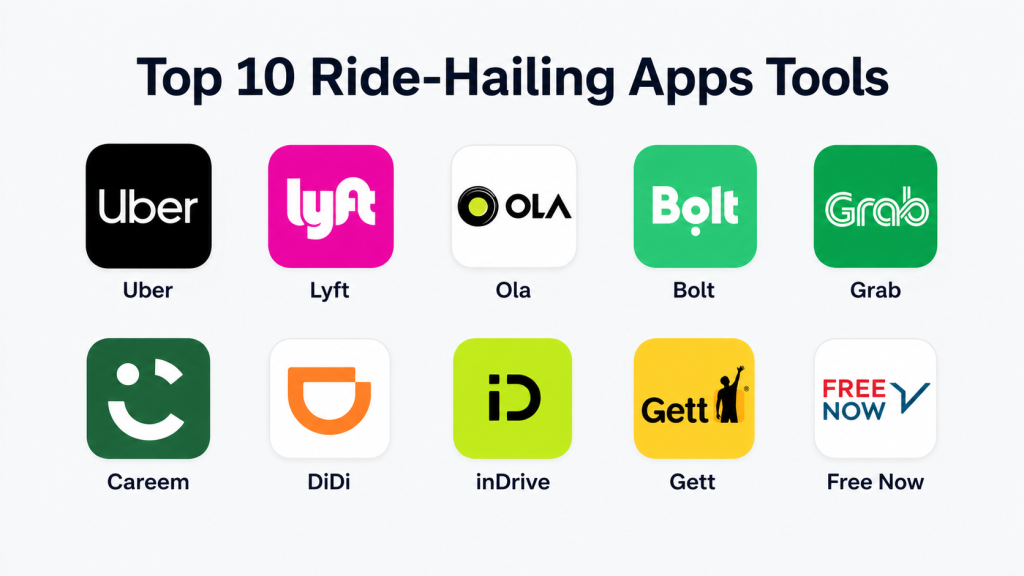
Introduction
Ride-Hailing Apps are mobile platforms that allow users to book rides instantly using smartphones. These apps connect passengers with drivers, offering convenient transportation options without the need for traditional taxis. They have transformed urban mobility by providing on-demand travel services.
With increasing urbanization and digital adoption, ride-hailing apps have become essential for daily commuting, business travel, and last-mile connectivity. Modern platforms offer features like real-time tracking, fare estimates, cashless payments, and safety tools. They improve convenience, reduce waiting time, and enhance user experience.
Common use cases:
- Booking rides for daily commuting
- Airport transfers and long-distance travel
- Business travel and corporate rides
- Ride-sharing and cost-saving options
- Last-mile connectivity
What buyers should evaluate:
- Availability and coverage
- Pricing and fare transparency
- Ease of use and interface
- Safety features and driver verification
- Payment options
- Ride options and vehicle types
- Customer support
- Reliability and performance
Best for: Individuals, commuters, travelers, and businesses needing on-demand transportation.
Not ideal for: Areas with limited driver availability or users without smartphone access.
Key Trends in Ride-Hailing Apps
- AI-based route optimization
- Integration with digital payments
- Expansion into electric and eco-friendly vehicles
- Subscription-based ride services
- Multi-modal transportation integration
- Enhanced safety and verification features
- Real-time tracking and analytics
- Integration with corporate travel systems
How We Evaluate Ride-Hailing Apps (Methodology)
- Market adoption and global presence
- Feature completeness and usability
- Pricing and value
- Safety and reliability
- Integration ecosystem
- Performance and availability
- Customer support quality
- Scalability across regions
Top 10 Ride-Hailing Apps
#1 — Uber
Short description:
Uber is one of the most widely used ride-hailing platforms globally. It offers a range of ride options from economy to premium. The app provides real-time tracking and fare estimates. It is suitable for individuals and businesses. It ensures convenience and reliability.
Key Features
- Ride booking
- Real-time tracking
- Fare estimation
- Multiple ride options
Pros
- Global availability
- Easy to use
Cons
- Surge pricing
- Pricing varies
Platforms / Deployment
iOS, Android / Cloud
Security & Compliance
Not publicly stated
Integrations & Ecosystem
Integrates with travel and payment systems.
- Payment apps
- Travel platforms
Support & Community
Strong support.
#2 — Lyft
Short description:
Lyft is a ride-hailing platform primarily operating in select regions. It provides ride booking and real-time tracking. The app focuses on user experience. It is suitable for commuters. It offers reliable service.
Key Features
- Ride booking
- Tracking
- Pricing estimates
- Ride options
Pros
- User-friendly
- Reliable
Cons
- Limited global presence
- Pricing varies
Platforms / Deployment
iOS, Android / Cloud
Security & Compliance
Not publicly stated
Integrations & Ecosystem
Supports integrations with payment systems.
- Payment apps
Support & Community
Good support.
#3 — Ola
Short description:
Ola is a popular ride-hailing platform in India and other regions. It offers multiple ride options and pricing models. The app supports cash and digital payments. It is suitable for local commuting. It provides affordability.
Key Features
- Ride booking
- Multiple ride options
- Payment flexibility
- Tracking
Pros
- Affordable
- Wide coverage
Cons
- Service inconsistency
- App performance issues
Platforms / Deployment
iOS, Android / Cloud
Security & Compliance
Not publicly stated
Integrations & Ecosystem
Integrates with payment systems.
- Digital wallets
Support & Community
Good support.
#4 — Bolt
Short description:
Bolt is a ride-hailing platform focused on affordability and speed. It offers ride booking and real-time tracking. The platform is suitable for urban commuting. It provides cost-effective rides. It is expanding globally.
Key Features
- Ride booking
- Tracking
- Pricing estimates
- Ride options
Pros
- Affordable
- Fast service
Cons
- Limited availability
- Pricing varies
Platforms / Deployment
iOS, Android / Cloud
Security & Compliance
Not publicly stated
Integrations & Ecosystem
Supports integrations with payment tools.
- Payment systems
Support & Community
Reliable support.
#5 — Grab
Short description:
Grab is a multi-service platform offering ride-hailing and delivery services. It is widely used in Southeast Asia. The app provides booking, tracking, and payments. It is suitable for urban users. It offers convenience.
Key Features
- Ride booking
- Tracking
- Payments
- Multi-service
Pros
- Multi-service platform
- Reliable
Cons
- Region-specific
- Pricing varies
Platforms / Deployment
iOS, Android / Cloud
Security & Compliance
Not publicly stated
Integrations & Ecosystem
Integrates with services.
- Payments
- Delivery
Support & Community
Strong support.
#6 — Careem
Short description:
Careem is a ride-hailing platform focused on the Middle East and surrounding regions. It offers ride booking and tracking features. The app supports multiple services. It is suitable for regional users. It provides convenience.
Key Features
- Ride booking
- Tracking
- Payments
- Service integration
Pros
- Regional focus
- Reliable
Cons
- Limited global presence
- Pricing varies
Platforms / Deployment
iOS, Android / Cloud
Security & Compliance
Not publicly stated
Integrations & Ecosystem
Supports integrations with payment tools.
- Payment systems
Support & Community
Good support.
#7 — DiDi
Short description:
DiDi is a global ride-hailing platform with strong presence in multiple regions. It provides booking, tracking, and pricing features. The app is suitable for commuters. It offers flexibility and convenience.
Key Features
- Ride booking
- Tracking
- Pricing
- Ride options
Pros
- Global expansion
- Flexible
Cons
- Limited availability in some regions
- Pricing varies
Platforms / Deployment
iOS, Android / Cloud
Security & Compliance
Not publicly stated
Integrations & Ecosystem
Supports integrations with payment systems.
- Digital payments
Support & Community
Good support.
#8 — inDrive
Short description:
inDrive is a ride-hailing platform that allows users to negotiate fares. It offers flexible pricing options. The app is suitable for cost-conscious users. It provides unique features. It improves affordability.
Key Features
- Ride booking
- Fare negotiation
- Tracking
- Payments
Pros
- Flexible pricing
- Affordable
Cons
- Limited features
- Availability varies
Platforms / Deployment
iOS, Android / Cloud
Security & Compliance
Not publicly stated
Integrations & Ecosystem
Supports payment integrations.
- Payment tools
Support & Community
Moderate support.
#9 — Gett
Short description:
Gett is a ride-hailing platform focused on corporate travel. It offers booking and tracking features. The platform is suitable for business users. It provides reliable service. It supports enterprise needs.
Key Features
- Ride booking
- Tracking
- Corporate travel
- Reporting
Pros
- Business-focused
- Reliable
Cons
- Limited availability
- Pricing varies
Platforms / Deployment
iOS, Android / Cloud
Security & Compliance
Not publicly stated
Integrations & Ecosystem
Integrates with business tools.
- Corporate systems
Support & Community
Good support.
#10 — Free Now
Short description:
Free Now is a ride-hailing platform offering multiple transportation options. It provides booking and tracking features. The app is suitable for urban users. It improves convenience. It supports multiple services.
Key Features
- Ride booking
- Tracking
- Multi-service
- Payments
Pros
- Flexible
- Easy to use
Cons
- Region-specific
- Pricing varies
Platforms / Deployment
iOS, Android / Cloud
Security & Compliance
Not publicly stated
Integrations & Ecosystem
Supports integrations with transport systems.
- Payment tools
Support & Community
Reliable support.
Comparison Table
| Tool Name | Best For | Platform(s) | Deployment | Standout Feature | Public Rating |
|---|---|---|---|---|---|
| Uber | Global | Mobile | Cloud | Availability | N/A |
| Lyft | Regional | Mobile | Cloud | UX | N/A |
| Ola | India | Mobile | Cloud | Affordability | N/A |
| Bolt | Urban | Mobile | Cloud | Cost | N/A |
| Grab | Asia | Mobile | Cloud | Multi-service | N/A |
| Careem | Middle East | Mobile | Cloud | Regional focus | N/A |
| DiDi | Global | Mobile | Cloud | Expansion | N/A |
| inDrive | Budget | Mobile | Cloud | Negotiation | N/A |
| Gett | Corporate | Mobile | Cloud | Business use | N/A |
| Free Now | Urban | Mobile | Cloud | Flexibility | N/A |
Evaluation & Scoring Table
| Tool | Core | Ease | Integrations | Security | Performance | Support | Value | Total |
|---|---|---|---|---|---|---|---|---|
| Uber | 9 | 9 | 8 | 7 | 9 | 9 | 8 | 8.5 |
| Lyft | 8 | 9 | 7 | 7 | 8 | 8 | 8 | 8.0 |
| Ola | 8 | 8 | 7 | 6 | 7 | 7 | 9 | 7.6 |
| Bolt | 8 | 8 | 7 | 6 | 8 | 7 | 9 | 7.7 |
| Grab | 9 | 8 | 8 | 7 | 9 | 8 | 8 | 8.3 |
| Careem | 8 | 8 | 7 | 7 | 8 | 7 | 8 | 7.8 |
| DiDi | 8 | 8 | 7 | 6 | 8 | 7 | 8 | 7.7 |
| inDrive | 7 | 8 | 6 | 6 | 7 | 6 | 9 | 7.1 |
| Gett | 8 | 7 | 8 | 7 | 8 | 8 | 7 | 7.7 |
| Free Now | 8 | 8 | 7 | 6 | 8 | 7 | 8 | 7.7 |
Which Ride-Hailing App Is Right for You?
Solo / Daily Commuters
If you rely on ride-hailing for daily travel, apps like Uber or Ola are ideal. These platforms offer wide availability and multiple ride options. They are easy to use and provide quick bookings. You can choose rides based on budget and comfort. For everyday commuting, reliability and coverage matter most.
SMB / Frequent Travelers
Frequent travelers and professionals should consider apps like Uber or Bolt. These platforms provide consistent service and better availability. They also offer features like ride scheduling and business-friendly options. This makes them suitable for regular travel needs. They provide a balance of cost and convenience.
Mid-Market / Urban Users
Urban users with multiple options can benefit from apps like Grab or DiDi. These platforms offer additional services like payments and deliveries. They provide a broader ecosystem beyond ride-hailing. This improves convenience and flexibility. They are ideal for users in metro cities.
Enterprise / Business Travel
For corporate travel, apps like Gett are more suitable. These platforms offer business-focused features like reporting and expense tracking. They help organizations manage employee travel efficiently. They also provide reliable service for business needs. These tools are designed for structured travel management.
Budget vs Premium
Budget apps like inDrive focus on affordability and flexible pricing. Premium apps like Uber offer better reliability and service quality. If cost is your priority, budget apps are sufficient. For comfort and consistency, premium options are better. Choose based on your travel preferences.
Feature Depth vs Ease of Use
Some apps offer advanced features like ride scheduling and analytics. Others focus on simple and quick booking. Beginners should choose easy-to-use apps. Advanced users can explore feature-rich platforms. The right choice depends on your needs.
Integrations & Scalability
Some apps integrate with payment systems and business tools. This improves convenience and efficiency. Scalability is important for frequent travelers. Choose platforms that can support your travel patterns. Integration enhances overall experience.
Safety & Reliability Needs
Safety is a key factor in ride-hailing. Choose apps with strong safety features like driver verification and tracking. Reliable platforms ensure better service quality. Always check safety features before choosing. Trust and reliability are essential.
Frequently Asked Questions (FAQs)
1. What are ride-hailing apps?
Ride-hailing apps are mobile platforms that allow users to book rides instantly. They connect passengers with drivers through smartphones. Users can track rides and make payments digitally. These apps improve convenience and accessibility. They are widely used in urban areas.
2. Are ride-hailing apps safe to use?
Most platforms include safety features like driver verification and ride tracking. Some also offer emergency support options. However, safety depends on the provider and region. It is important to follow safety guidelines. Always use trusted apps.
3. Can I book rides in advance?
Yes, many apps allow users to schedule rides in advance. This is useful for airport transfers or planned trips. It ensures availability at a specific time. Scheduling improves convenience. It is a common feature.
4. How do ride-hailing apps calculate fares?
Fares are calculated based on distance, time, and demand. Some apps use dynamic pricing models. Surge pricing may apply during peak hours. Users can see fare estimates before booking. Pricing varies by platform.
5. Do ride-hailing apps support cash payments?
Many apps support both cash and digital payments. Payment options depend on the region. Digital payments are more common. Cash options provide flexibility. Choose based on your preference.
6. Can I share rides with others?
Yes, some apps offer ride-sharing options. This allows users to share rides and reduce costs. It is useful for daily commuting. Ride-sharing improves affordability. It is available in select regions.
7. What features should I look for?
Look for real-time tracking, fare estimates, and safety features. Payment options and ride variety are also important. Ease of use should be considered. Choose features based on your needs. Reliability is key.
8. What are common issues with ride-hailing apps?
Common issues include surge pricing and driver availability. App performance can vary. Service quality may differ by location. These challenges depend on the platform. Choosing a reliable app helps.
9. Can businesses use ride-hailing apps?
Yes, many platforms offer business solutions. Companies can manage employee travel and expenses. This improves efficiency and control. Business features vary by platform. It is useful for corporate travel.
10. What are alternatives to ride-hailing apps?
Alternatives include taxis, public transport, and car rentals. These options may lack convenience and flexibility. Ride-hailing apps provide faster and easier access. They improve travel experience. They are widely preferred.
Conclusion
Ride-Hailing Apps have revolutionized how people travel by offering instant, on-demand transportation with just a few taps on a smartphone. They provide flexibility, convenience, and multiple ride options, making them an essential part of modern urban mobility. With features like real-time tracking, digital payments, and safety tools, these platforms have significantly improved the overall travel experience.
Choosing the right app depends on your location, travel frequency, and budget. Daily commuters may prioritize affordability and availability, while business users may require reliability and reporting features. Some platforms focus on cost savings, while others provide premium services and broader coverage, so evaluating your needs is important.
To get started, explore the apps available in your region and test a few options. Compare pricing, service quality, and safety features before making a decision. The right ride-hailing app can save time, reduce travel stress, and provide a smoother, more efficient commuting experience.
