Introduction
Last-mile Delivery Platforms are software solutions designed to manage the final step of the delivery process—from a distribution center to the end customer. This stage is often the most complex and expensive part of logistics, requiring real-time coordination, route optimization, and customer communication.
With the rapid growth of eCommerce, hyperlocal delivery, and customer expectations for same-day or next-day delivery, last-mile delivery platforms have become mission-critical. Modern solutions now incorporate AI-driven route optimization, real-time tracking, mobile apps, and strong security frameworks including Identity Management, Zero Trust access, and role-based controls to ensure safe and efficient operations.
Common use cases:
- Real-time delivery tracking and visibility
- Route optimization for faster deliveries
- Driver and fleet management
- Proof of delivery and customer notifications
- Hyperlocal and same-day delivery operations
Key evaluation criteria:
- Route optimization and dispatch capabilities
- Real-time tracking and visibility
- Integration with eCommerce, ERP, and logistics systems
- Scalability for high delivery volumes
- Driver mobile app functionality
- Security features like RBAC, MFA, and data encryption
- Ease of use and onboarding
- Pricing flexibility and ROI
Best for: eCommerce companies, logistics providers, retailers, food delivery services, and enterprises managing high delivery volumes.
Not ideal for: Businesses with minimal delivery operations or those outsourcing delivery entirely.
Key Trends in Last-mile Delivery Platforms
- AI-powered route optimization to reduce delivery time and fuel costs
- Crowdsourced delivery networks for flexible scaling
- Real-time tracking with customer visibility
- Zero Trust security models for secure access and data protection
- Mobile-first driver applications for efficient delivery execution
- Integration with eCommerce platforms for seamless order flow
- Sustainability tracking for eco-friendly delivery operations
- Automation and smart dispatching using machine learning
- Subscription-based pricing models replacing traditional licensing
- Delivery experience enhancements with notifications and ETA updates
How We Selected These Last-mile Delivery Platforms (Methodology)
- Evaluated market adoption and popularity
- Assessed feature completeness and innovation
- Reviewed performance and scalability capabilities
- Analyzed security posture including RBAC and encryption
- Considered integration ecosystem and API availability
- Evaluated usability and onboarding complexity
- Assessed fit across SMB, mid-market, and enterprise segments
- Reviewed support quality and documentation
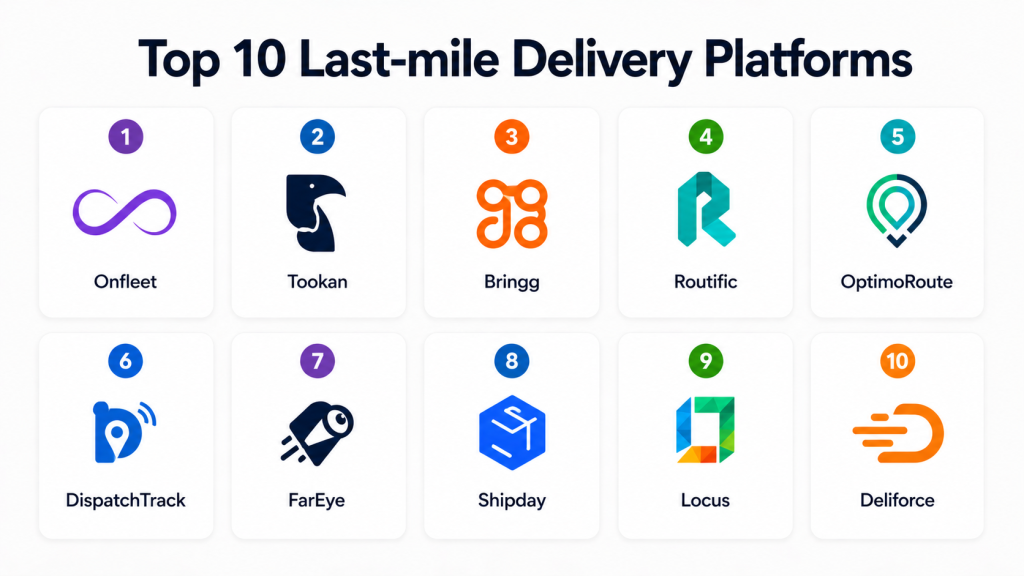
Top 10 Last-mile Delivery Platforms
#1 — Onfleet
Short description: Onfleet is a popular last-mile delivery platform designed for businesses requiring efficient route planning and real-time tracking. It provides a user-friendly interface and strong mobile capabilities for drivers. The platform supports delivery optimization and customer communication. Ideal for SMBs and mid-sized logistics operations. Offers analytics and reporting tools. Scales well for growing delivery businesses. Widely used in food, retail, and logistics sectors.
Key Features
- Route optimization
- Real-time tracking
- Driver mobile app
- Delivery analytics
- Customer notifications
Pros
- Easy to use
- Strong mobile support
Cons
- Limited enterprise features
- Pricing can scale quickly
Platforms / Deployment
Cloud / iOS / Android
Security & Compliance
RBAC, encryption
Integrations & Ecosystem
Onfleet integrates with eCommerce and logistics systems through APIs.
- eCommerce platforms
- CRM tools
- Delivery systems
Support & Community
Good documentation and support
#2 — Tookan
Short description: Tookan is a delivery management platform designed for businesses of all sizes. It offers route optimization, real-time tracking, and task management features. Known for flexibility and customization. Suitable for hyperlocal delivery operations. Supports multiple delivery models. Offers strong reporting tools. Ideal for growing delivery businesses.
Key Features
- Task management
- Route optimization
- Real-time tracking
- Analytics dashboard
Pros
- Flexible
- Affordable
Cons
- UI can feel cluttered
- Limited advanced analytics
Platforms / Deployment
Cloud / Mobile
Security & Compliance
Basic RBAC
Integrations & Ecosystem
- APIs
- CRM integrations
Support & Community
Moderate support
#3 — Bringg
Short description: Bringg is an enterprise-grade delivery orchestration platform. It provides advanced automation and real-time visibility across delivery operations. Designed for large-scale logistics and retail businesses. Offers strong analytics and optimization features. Supports multiple delivery models. Highly scalable platform. Ideal for enterprises.
Key Features
- Delivery orchestration
- Real-time visibility
- Automation tools
- Analytics
Pros
- Enterprise-grade
- Highly scalable
Cons
- Complex implementation
- High cost
Platforms / Deployment
Cloud
Security & Compliance
RBAC, encryption, SSO
Integrations & Ecosystem
- ERP systems
- eCommerce platforms
- APIs
Support & Community
Enterprise support
#4 — Routific
Short description: Routific is a route optimization platform focused on simplicity and efficiency. It helps businesses plan delivery routes quickly and efficiently. Ideal for SMBs. Offers real-time tracking and reporting. Easy to use interface. Cost-effective solution. Suitable for small delivery operations.
Key Features
- Route optimization
- Delivery tracking
- Reporting tools
Pros
- Simple interface
- Affordable
Cons
- Limited advanced features
- Not for large enterprises
Platforms / Deployment
Cloud
Security & Compliance
Basic security
Integrations & Ecosystem
- APIs
Support & Community
Good SMB support
#5 — OptimoRoute
Short description: OptimoRoute provides route planning and optimization tools for delivery businesses. It offers real-time tracking and driver management features. Designed for SMB and mid-market users. Easy to deploy and use. Supports scheduling and optimization. Helps reduce delivery costs. Ideal for growing businesses.
Key Features
- Route planning
- Scheduling
- Driver tracking
- Analytics
Pros
- Easy to use
- Cost-effective
Cons
- Limited enterprise features
- Basic analytics
Platforms / Deployment
Cloud
Security & Compliance
Basic RBAC
Integrations & Ecosystem
- APIs
Support & Community
Moderate support
#6 — DispatchTrack
Short description: DispatchTrack is a last-mile delivery platform focused on route optimization and customer experience. It provides real-time tracking and analytics. Suitable for mid-market and enterprise businesses. Offers strong reporting tools. Supports customer notifications. Known for reliability.
Key Features
- Route optimization
- Real-time tracking
- Customer notifications
- Analytics
Pros
- Strong analytics
- Reliable platform
Cons
- Moderate cost
- UI can improve
Platforms / Deployment
Cloud
Security & Compliance
RBAC
Integrations & Ecosystem
- ERP systems
- APIs
Support & Community
Good support
#7 — FarEye
Short description: FarEye is an enterprise delivery management platform with AI-driven optimization. It supports predictive analytics and automation. Designed for large-scale logistics operations. Offers real-time visibility and control. Highly scalable. Ideal for enterprises seeking advanced capabilities.
Key Features
- AI optimization
- Predictive analytics
- Real-time tracking
- Automation
Pros
- Advanced AI features
- Scalable
Cons
- Expensive
- Complex
Platforms / Deployment
Cloud
Security & Compliance
RBAC, encryption
Integrations & Ecosystem
- ERP
- Logistics systems
Support & Community
Enterprise support
#8 — Shipday
Short description: Shipday is a lightweight last-mile delivery platform designed for small businesses and restaurants. It offers order tracking and driver management features. Easy to use and affordable. Suitable for hyperlocal delivery. Provides basic analytics. Ideal for SMBs.
Key Features
- Order tracking
- Driver management
- Notifications
Pros
- Affordable
- Easy setup
Cons
- Limited features
- Not scalable
Platforms / Deployment
Cloud
Security & Compliance
Basic security
Integrations & Ecosystem
- APIs
Support & Community
Basic support
#9 — Locus
Short description: Locus is an AI-powered logistics platform designed for route optimization and delivery planning. It provides real-time visibility and analytics. Suitable for enterprises and logistics companies. Offers advanced optimization features. Highly scalable platform. Known for AI-driven insights.
Key Features
- AI route optimization
- Real-time tracking
- Analytics tools
Pros
- Strong AI capabilities
- Scalable
Cons
- Premium pricing
- Requires expertise
Platforms / Deployment
Cloud
Security & Compliance
RBAC, encryption
Integrations & Ecosystem
- ERP systems
- APIs
Support & Community
Enterprise support
#10 — Deliforce
Short description: Deliforce is a delivery management platform designed for SMBs and growing businesses. It offers route optimization and tracking features. Easy to deploy and use. Affordable solution. Supports multiple delivery workflows. Ideal for small to mid-sized operations.
Key Features
- Route optimization
- Delivery tracking
- Driver management
Pros
- Affordable
- Easy to use
Cons
- Limited enterprise features
- Basic analytics
Platforms / Deployment
Cloud
Security & Compliance
Basic RBAC
Integrations & Ecosystem
- APIs
Support & Community
Moderate support
Comparison Table (Top 10)
| Tool Name | Best For | Platform(s) | Deployment | Standout Feature | Public Rating |
|---|---|---|---|---|---|
| Onfleet | SMB/Mid | Mobile/Web | Cloud | Ease of use | N/A |
| Tookan | SMB | Mobile/Web | Cloud | Flexibility | N/A |
| Bringg | Enterprise | Web | Cloud | Orchestration | N/A |
| Routific | SMB | Web | Cloud | Simplicity | N/A |
| OptimoRoute | SMB | Web | Cloud | Scheduling | N/A |
| DispatchTrack | Mid/Enterprise | Web | Cloud | Customer experience | N/A |
| FarEye | Enterprise | Web | Cloud | AI optimization | N/A |
| Shipday | SMB | Web | Cloud | Affordability | N/A |
| Locus | Enterprise | Web | Cloud | AI insights | N/A |
| Deliforce | SMB | Web | Cloud | Ease of use | N/A |
Evaluation & Scoring of Last-mile Delivery Platforms
| Tool | Core | Ease | Integrations | Security | Performance | Support | Value | Total |
|---|---|---|---|---|---|---|---|---|
| Onfleet | 8 | 9 | 8 | 8 | 8 | 8 | 8 | 8.2 |
| Tookan | 7 | 8 | 7 | 7 | 7 | 7 | 9 | 7.6 |
| Bringg | 9 | 7 | 9 | 9 | 9 | 9 | 6 | 8.6 |
| Routific | 6 | 9 | 6 | 6 | 7 | 7 | 9 | 7.3 |
| OptimoRoute | 7 | 8 | 7 | 7 | 7 | 7 | 8 | 7.6 |
| DispatchTrack | 8 | 7 | 8 | 7 | 8 | 8 | 7 | 7.8 |
| FarEye | 9 | 6 | 9 | 8 | 9 | 8 | 6 | 8.2 |
| Shipday | 6 | 9 | 6 | 6 | 6 | 6 | 9 | 7.0 |
| Locus | 9 | 7 | 9 | 8 | 9 | 8 | 6 | 8.3 |
| Deliforce | 7 | 8 | 7 | 7 | 7 | 7 | 8 | 7.6 |
How to interpret scores:
These scores are comparative and reflect strengths across different categories. Enterprise platforms score higher in features and scalability, while SMB tools excel in ease of use and affordability. Choose based on your delivery scale and operational needs.
Which Last-mile Delivery Platform Is Right for You?
Solo / Freelancer
Shipday or Routific for basic needs
SMB
Onfleet, Tookan, Deliforce
Mid-Market
DispatchTrack, OptimoRoute
Enterprise
Bringg, FarEye, Locus
Budget vs Premium
Budget = Shipday, Routific
Premium = Bringg, Locus
Feature Depth vs Ease of Use
Advanced = Bringg, FarEye
Simple = Onfleet, Shipday
Integrations & Scalability
Locus and Bringg are strong choices
Security & Compliance Needs
Enterprise tools offer stronger controls
Frequently Asked Questions (FAQs)
1. What is a last-mile delivery platform?
It is software that manages the final stage of delivery. It helps optimize routes and track deliveries. Businesses use it for efficiency. It improves customer experience. Modern tools include analytics and automation.
2. How much do these platforms cost?
Pricing varies widely. SMB tools are affordable. Enterprise tools are expensive. Subscription models are common. Costs depend on scale.
3. How long does implementation take?
Implementation can take days to months. SMB tools are faster. Enterprise tools require planning. Training is needed. Integration adds complexity.
4. Are these platforms secure?
Most include RBAC and encryption. Enterprise tools offer stronger security. Zero Trust is becoming common. Always verify vendor security. Compliance varies.
5. Can they integrate with ERP systems?
Yes, most tools support integrations. APIs enable connectivity. Enterprise tools offer deeper integration. SMB tools may be limited. Integration ensures data flow.
6. What are common mistakes?
Choosing overly complex tools is common. Ignoring integration needs causes issues. Lack of training affects adoption. Underestimating costs is risky. Always evaluate needs.
7. Can I switch platforms later?
Switching is possible but complex. Data migration is required. Integration must be redone. Costs may increase. Plan carefully.
8. Do small businesses need it?
Not always. Useful when delivery volume grows. Helps improve efficiency. Reduces errors. Supports scaling.
9. What industries use these tools?
eCommerce, logistics, food delivery, and retail use them. Any delivery-based business benefits. Industry needs vary. Customization helps. Adoption is increasing.
10. What are alternatives?
Basic routing tools or spreadsheets can work. ERP systems may include features. However, they lack advanced capabilities. Dedicated platforms are better. They scale more effectively.
Conclusion
Last-mile delivery platforms have become essential for businesses aiming to meet rising customer expectations for fast and reliable delivery. With capabilities like AI-powered route optimization, real-time tracking, and advanced analytics, these tools enable organizations to streamline operations and reduce costs while improving customer satisfaction. Enterprise-grade platforms provide deep control and scalability, whereas SMB-focused solutions prioritize simplicity and affordability.
The right platform depends on your delivery volume, operational complexity, and integration requirements. Instead of focusing solely on features, evaluate how well the solution aligns with your workflows and long-term growth plans. Shortlist a few tools, run pilot tests, and validate integrations, performance, and security before making a final decision.
