Introduction
HRIS Platforms help organizations manage employee data, HR workflows, records, leave, documents, approvals, and core people operations in one centralized system. In plain English, an HRIS acts as the digital backbone of HR administration, replacing spreadsheets, paper files, and disconnected tools with structured employee records and automated workflows.
These platforms matter because businesses now manage hybrid teams, growing compliance requirements, distributed workforces, and rising expectations for employee self-service. Companies use HRIS platforms to maintain accurate employee information, simplify onboarding, handle time-off requests, manage policies and documents, and improve reporting across the organization.
Common use cases include:
- Centralized employee record management
- Onboarding and offboarding workflows
- Leave and attendance administration
- Document storage and policy acknowledgments
- HR reporting and people analytics
What buyers should evaluate:
- Core employee record management
- Workflow automation and approvals
- Employee and manager self-service
- Reporting and dashboard capabilities
- Integrations with payroll and ATS tools
- Security and access controls
- Mobile accessibility
- Ease of implementation
- Scalability for headcount growth
- Total value for money
Best for: HR teams, operations managers, SMBs, mid-market companies, and enterprises that want a reliable system of record for employee data and HR workflows.
Not ideal for: Very small teams with only a few employees and minimal HR processes may be fine with payroll software or lightweight record-keeping tools instead of a dedicated HRIS.
Key Trends in HRIS Platforms
- AI-assisted HR workflow automation and employee support
- Stronger employee self-service across mobile and web
- Skills, role, and people analytics becoming more common
- Deeper integrations with payroll, ATS, and performance tools
- Document-driven compliance workflows and audit readiness
- More modular packaging for SMB and mid-market buyers
- Cross-functional workflows connecting HR, IT, and finance
- Greater focus on user experience for employees and managers
- Expanded automation for onboarding and policy acknowledgments
- Rising expectations for permissions, audit trails, and admin governance
How We Selected These Tools (Methodology)
- Market recognition and broad business adoption
- Strength of employee record and core HR workflows
- Ease of use for HR admins, managers, and employees
- Breadth of workflow automation and self-service tools
- Reporting and analytics quality
- Integration ecosystem maturity
- Security posture signals such as permissions and admin controls
- Suitability across SMB, mid-market, and enterprise segments
- Vendor maturity, onboarding, and customer support reputation
- Overall value relative to feature depth and scalability
Top 10 HRIS Platforms
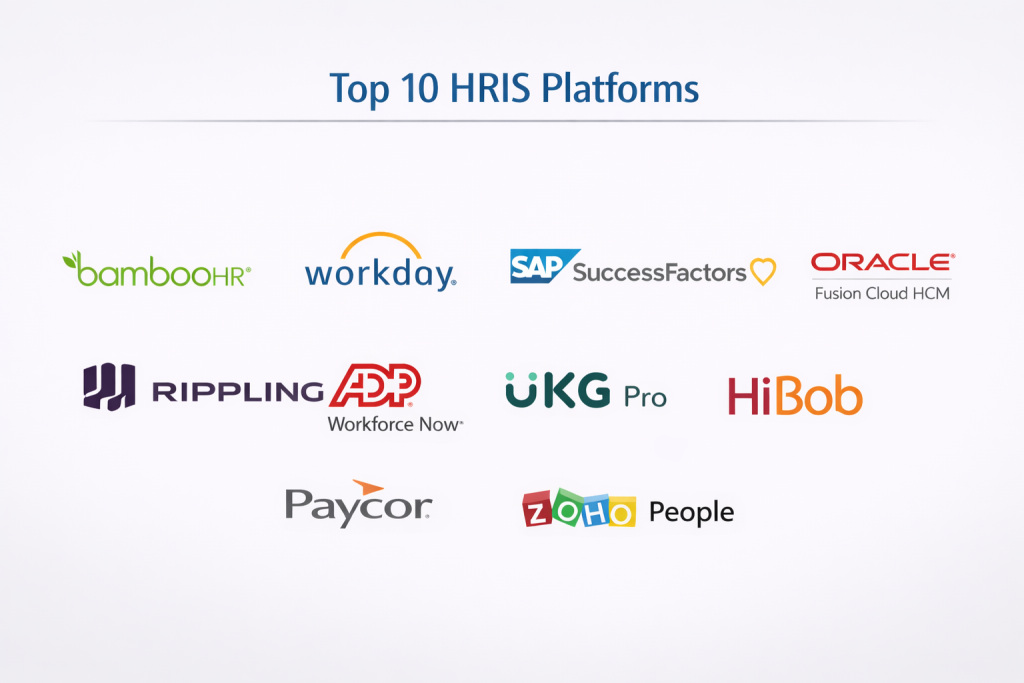
Top 10 Tool Names
- BambooHR
- Workday
- SAP SuccessFactors
- Oracle Fusion Cloud HCM
- Rippling
- ADP Workforce Now
- UKG Pro
- HiBob
- Paycor
- Zoho People
#1 — BambooHR
Short description (2–3 lines): BambooHR is a widely used HRIS platform for small and mid-sized businesses that want clean employee records, onboarding, time-off tracking, and easy HR administration. It is especially attractive for teams that prioritize usability.
Key Features
- Centralized employee database
- Onboarding and offboarding workflows
- Time-off tracking and approvals
- Employee self-service
- Document storage and e-signature workflows
- Reporting and dashboards
- Workflow automation for routine HR tasks
Pros
- Very easy to learn and administer
- Strong fit for SMB and mid-market HR teams
- Clean employee and manager experience
Cons
- Less suited for highly complex enterprise environments
- Advanced global HR needs may require additional tools
Platforms / Deployment
Web / Mobile
Cloud
Security & Compliance
Permissions, admin controls, encryption. Other compliance details vary.
Integrations & Ecosystem
BambooHR works well as a central HR system of record for growing businesses and integrates with a wide range of payroll and HR operations tools.
- Payroll systems
- Applicant tracking tools
- Time tracking platforms
- Benefits tools
- API
Support & Community
Strong SMB reputation with approachable onboarding resources, documentation, and support. Often chosen by teams that want a practical HRIS without heavy implementation effort.
#2 — Workday
Short description (2–3 lines): Workday is a leading enterprise HRIS and HCM platform for organizations needing deep employee data management, workforce planning, reporting, and broad HR process coverage. It is best suited for large and complex businesses.
Key Features
- Core HR and employee records
- Organizational structure management
- Employee and manager self-service
- Workflow approvals
- Reporting and workforce analytics
- Talent and workforce planning support
- Broad enterprise HR administration
Pros
- Strong enterprise depth and scalability
- Excellent analytics and visibility
- Good fit for global organizations
Cons
- Implementation can be lengthy
- Premium pricing and higher administrative complexity
Platforms / Deployment
Web / Mobile
Cloud
Security & Compliance
SSO/SAML, RBAC, audit controls, encryption, enterprise admin controls.
Integrations & Ecosystem
Workday is often used as a strategic HR system tied to finance, planning, and enterprise reporting. It works well where employee data must connect to broader operational systems.
- ERP systems
- Payroll tools
- Identity platforms
- Finance applications
- API
Support & Community
Strong enterprise support structure and large implementation ecosystem. Best for organizations with formal HRIS governance and rollout capabilities.
#3 — SAP SuccessFactors
Short description (2–3 lines): SAP SuccessFactors is a comprehensive HRIS and HCM platform for enterprises that need global employee data management, talent workflows, and standardized HR operations across regions.
Key Features
- Core HR and employee records
- Organizational and workforce structure management
- Employee self-service
- Onboarding support
- Reporting and analytics
- Global HR administration
- Workflow and approval automation
Pros
- Broad enterprise HR coverage
- Good fit for multinational companies
- Strong alignment with SAP environments
Cons
- User experience can feel complex
- Full-suite deployment may require significant effort
Platforms / Deployment
Web / Mobile
Cloud
Security & Compliance
SSO, permissions, audit capabilities, encryption. Other details vary by deployment scope.
Integrations & Ecosystem
SAP SuccessFactors is attractive to enterprises that want HR data closely aligned with enterprise operations and existing SAP infrastructure.
- SAP systems
- Payroll tools
- Finance platforms
- Learning systems
- API
Support & Community
Large partner ecosystem and broad enterprise familiarity. Support outcomes often depend on implementation quality and internal process maturity.
#4 — Oracle Fusion Cloud HCM
Short description (2–3 lines): Oracle Fusion Cloud HCM is an enterprise HRIS platform built for organizations that want strong configurability, broad process coverage, and centralized workforce administration.
Key Features
- Core employee records management
- Organizational and workforce structure setup
- Onboarding workflows
- Reporting and dashboards
- Role-based approvals
- Global HR process support
- Analytics and data visibility
Pros
- Strong enterprise configurability
- Broad process depth
- Good fit for complex organizations
Cons
- More complex to implement and administer
- May be more than mid-sized teams need
Platforms / Deployment
Web / Mobile
Cloud
Security & Compliance
SSO/SAML, role controls, audit visibility, encryption, enterprise governance features.
Integrations & Ecosystem
Oracle Fusion Cloud HCM is often selected by enterprises that want HR connected with finance, ERP, and enterprise data processes.
- Oracle applications
- ERP systems
- Payroll connectors
- Analytics tools
- API
Support & Community
Strong enterprise implementation ecosystem. Best for companies with dedicated HRIS and IT support structures.
#5 — Rippling
Short description (2–3 lines): Rippling is a modern HRIS platform that combines employee records, onboarding, payroll, app access, and automation. It is a strong fit for fast-growing businesses that want HR and IT workflows connected.
Key Features
- Employee records and directory
- Onboarding and offboarding automation
- Workflow automation
- Time and attendance support
- Payroll connectivity
- Document management
- Employee self-service
Pros
- Strong automation and modern interface
- Useful HR and IT workflow combination
- Good fit for fast-growing companies
Cons
- Pricing depends on selected modules
- Best value appears when multiple modules are bundled
Platforms / Deployment
Web / Mobile
Cloud
Security & Compliance
SSO, permissions, admin controls, encryption, audit visibility.
Integrations & Ecosystem
Rippling stands out because it helps unify employee lifecycle workflows across HR, payroll, identity, and device access.
- Identity tools
- Payroll systems
- Finance apps
- Collaboration tools
- API
Support & Community
Fast-growing ecosystem with strong product momentum. Best for teams that want automation-led operations rather than traditional HR-only software.
#6 — ADP Workforce Now
Short description (2–3 lines): ADP Workforce Now is a mature HRIS and payroll platform for growing businesses that want core HR administration, employee records, benefits, and payroll in one environment.
Key Features
- Core HR and employee records
- Payroll connectivity
- Benefits administration
- Employee self-service
- Reporting dashboards
- Time and attendance support
- Workflow approvals
Pros
- Strong payroll credibility
- Broad HR and admin functionality
- Good scalability for growing organizations
Cons
- Pricing can rise with added modules
- Interface may feel dense for smaller teams
Platforms / Deployment
Web / Mobile
Cloud
Security & Compliance
SSO, permissions, audit controls, encryption.
Integrations & Ecosystem
ADP Workforce Now works well for organizations that want payroll-led HR operations with strong compatibility across finance and workforce tools.
- Accounting tools
- Benefits systems
- Time tracking platforms
- HR tools
- API
Support & Community
Large installed base and mature support model. A practical option for teams wanting an established HR and payroll vendor.
#7 — UKG Pro
Short description (2–3 lines): UKG Pro is a strong HRIS platform for businesses that need employee administration tied closely to payroll and workforce management. It works well for mid-market and enterprise organizations with more operational complexity.
Key Features
- Core HR and employee administration
- Payroll and benefits support
- Employee self-service
- Workflow automation
- Reporting and people analytics
- Workforce management connectivity
- Document and record management
Pros
- Good balance of HR, payroll, and workforce functionality
- Strong fit for workforce-heavy organizations
- Scales well for complex businesses
Cons
- Broader deployments can take time
- May be too feature-heavy for smaller teams
Platforms / Deployment
Web / Mobile
Cloud
Security & Compliance
SSO, permissions, RBAC, audit controls, encryption.
Integrations & Ecosystem
UKG Pro is especially useful where employee data, payroll, and workforce operations need to stay tightly aligned.
- Payroll tools
- ERP platforms
- Benefits systems
- Workforce apps
- API
Support & Community
Mature support model for mid-market and enterprise buyers. Particularly relevant for organizations with shift or labor-heavy environments.
#8 — HiBob
Short description (2–3 lines): HiBob is a modern HRIS platform designed for growing businesses that want employee records, workflows, engagement tools, and people analytics in a more contemporary user experience.
Key Features
- Employee records and org charts
- Onboarding workflows
- Time-off and attendance administration
- Employee self-service
- Workflow automation
- People analytics and dashboards
- Culture and engagement support features
Pros
- Modern and appealing user experience
- Good fit for fast-growing mid-market companies
- Strong employee experience focus
Cons
- Less enterprise depth than the largest vendors
- Advanced payroll needs may require partner tools
Platforms / Deployment
Web / Mobile
Cloud
Security & Compliance
Permissions, SSO, encryption, admin controls.
Integrations & Ecosystem
HiBob is often chosen by companies that want a people-friendly HRIS with good reporting and straightforward connections to the surrounding HR stack.
- Payroll providers
- ATS tools
- Collaboration platforms
- HR apps
- API
Support & Community
Known for a modern approach and growing market presence. Works well for companies prioritizing adoption and manager usability.
#9 — Paycor
Short description (2–3 lines): Paycor is an HRIS and payroll platform aimed at growing organizations that want core HR, employee records, recruiting, and workforce administration in one system.
Key Features
- Core HR and employee records
- Payroll integration
- Onboarding workflows
- Time and attendance support
- Employee self-service
- Reporting and dashboards
- Workflow approvals
Pros
- Good fit for mid-market growth companies
- Balanced HR and payroll capability
- More approachable than many enterprise suites
Cons
- Less global depth than large enterprise vendors
- Feature breadth may vary by plan and add-ons
Platforms / Deployment
Web / Mobile
Cloud
Security & Compliance
Permissions, encryption, admin controls. Other certifications not publicly stated.
Integrations & Ecosystem
Paycor is attractive to organizations that want to move from basic payroll software into a broader HR operating platform.
- Payroll tools
- HR apps
- Finance systems
- Time systems
- API
Support & Community
Solid support model for growing businesses. Often a good step-up option for organizations formalizing HR operations.
#10 — Zoho People
Short description (2–3 lines): Zoho People is a cost-effective HRIS platform for SMBs that need employee records, leave management, onboarding workflows, and HR administration in a broader business suite environment.
Key Features
- Employee database and records
- Leave and attendance management
- Onboarding workflows
- Employee self-service
- Workflow automation
- Reports and dashboards
- Document management
Pros
- Strong value pricing
- Good fit for companies already using Zoho products
- Broad HR functionality for SMB teams
Cons
- Less enterprise depth than larger vendors
- Best fit when ecosystem alignment matters
Platforms / Deployment
Web / Mobile
Cloud
Security & Compliance
Permissions, encryption, admin controls.
Integrations & Ecosystem
Zoho People works best when connected with the wider Zoho suite, helping businesses manage HR alongside finance, CRM, and collaboration workflows.
- Zoho business apps
- Finance tools
- CRM systems
- Collaboration tools
- API
Support & Community
Large ecosystem, broad documentation, and good practical value for SMBs that prefer suite convenience over enterprise customization.
Comparison Table (Top 10)
| Tool Name | Best For | Platform(s) Supported | Deployment | Standout Feature | Public Rating |
|---|---|---|---|---|---|
| BambooHR | SMB and mid-market HR teams | Web / Mobile | Cloud | Ease of use | N/A |
| Workday | Global enterprises | Web / Mobile | Cloud | Enterprise analytics and scale | N/A |
| SAP SuccessFactors | SAP-centered enterprises | Web / Mobile | Cloud | Global HR standardization | N/A |
| Oracle Fusion Cloud HCM | Complex enterprise operations | Web / Mobile | Cloud | Deep configurability | N/A |
| Rippling | Fast-growing automation-focused businesses | Web / Mobile | Cloud | HR + IT workflow automation | N/A |
| ADP Workforce Now | Payroll-led growing businesses | Web / Mobile | Cloud | HR + payroll maturity | N/A |
| UKG Pro | Workforce-heavy organizations | Web / Mobile | Cloud | HR + workforce alignment | N/A |
| HiBob | Modern mid-market teams | Web / Mobile | Cloud | Contemporary employee experience | N/A |
| Paycor | Mid-market growth companies | Web / Mobile | Cloud | Balanced HR and payroll platform | N/A |
| Zoho People | Value-focused SMBs | Web / Mobile | Cloud | Affordable suite fit | N/A |
Evaluation & Scoring of HRIS Platforms
| Tool Name | Core (25%) | Ease (15%) | Integrations (15%) | Security (10%) | Performance (10%) | Support (10%) | Value (15%) | Weighted Total (0–10) |
|---|---|---|---|---|---|---|---|---|
| BambooHR | 8 | 9 | 7 | 8 | 8 | 8 | 8 | 8.00 |
| Workday | 9 | 6 | 9 | 9 | 9 | 8 | 6 | 8.00 |
| SAP SuccessFactors | 9 | 6 | 8 | 8 | 8 | 8 | 6 | 7.70 |
| Oracle Fusion Cloud HCM | 9 | 6 | 8 | 9 | 8 | 8 | 6 | 7.80 |
| Rippling | 8 | 8 | 9 | 8 | 8 | 8 | 7 | 8.00 |
| ADP Workforce Now | 8 | 7 | 8 | 8 | 8 | 8 | 7 | 7.75 |
| UKG Pro | 8 | 7 | 8 | 8 | 8 | 8 | 7 | 7.75 |
| HiBob | 8 | 8 | 8 | 8 | 8 | 7 | 7 | 7.80 |
| Paycor | 8 | 8 | 7 | 8 | 8 | 8 | 8 | 7.90 |
| Zoho People | 7 | 8 | 8 | 7 | 7 | 7 | 9 | 7.65 |
These scores are comparative rather than absolute. Higher totals usually reflect broader capabilities or stronger long-term scalability, but that does not make one platform the best fit for every company. SMBs may prefer easier and lower-cost tools, while enterprises may prioritize governance, analytics, and integration depth. Use the scores to narrow your shortlist, not to pick a universal winner.
Which HRIS Platform Is Right for You?
Solo / Freelancer
A dedicated HRIS is usually unnecessary for solo operations. Basic payroll or contractor tools are often enough until the team begins to grow.
SMB
BambooHR and Zoho People are strong choices for smaller businesses that want easy HR administration, employee records, and workflow automation without a heavy rollout. Rippling also works well for tech-forward SMBs that want broader automation.
Mid-Market
HiBob, Paycor, BambooHR, Rippling, and ADP Workforce Now are solid fits for growing organizations that need more structure, reporting, and employee self-service without jumping immediately into the heaviest enterprise suites.
Enterprise
Workday, SAP SuccessFactors, Oracle Fusion Cloud HCM, and UKG Pro are better suited for large organizations that need broad governance, scalability, deeper analytics, and stronger global HR support.
Budget vs Premium
For budget-conscious buyers, Zoho People and BambooHR often offer better simplicity-to-value balance. For premium enterprise depth, Workday, Oracle Fusion Cloud HCM, and SAP SuccessFactors are stronger options.
Feature Depth vs Ease of Use
If ease of use matters most, BambooHR, HiBob, and Zoho People stand out. If deeper enterprise functionality matters more, Workday, Oracle Fusion Cloud HCM, SAP SuccessFactors, and UKG Pro are better choices.
Integrations & Scalability
Rippling is especially strong for HR plus IT automation. Workday, Oracle Fusion Cloud HCM, SAP SuccessFactors, and ADP Workforce Now are better choices for organizations needing HR tied to enterprise finance, payroll, and operational systems.
Security & Compliance Needs
Organizations with stronger governance requirements should prioritize platforms with SSO, RBAC, audit trails, admin controls, and structured approval workflows. Enterprise buyers should focus especially on vendors built for complex organizational environments.
Frequently Asked Questions (FAQs)
What is an HRIS platform?
An HRIS platform is a system used to manage employee records, HR workflows, documents, approvals, and core people administration in one place. It acts as a central system of record for HR.
How is an HRIS different from HCM software?
An HRIS usually focuses more on core HR administration and employee records, while broader HCM suites may also include payroll, talent, learning, performance, and workforce planning.
Do small businesses need an HRIS?
Not always, but many growing SMBs benefit from having structured employee data, leave workflows, onboarding, and reporting in one system rather than using spreadsheets.
Can an HRIS integrate with payroll?
Yes. Many HRIS platforms integrate directly with payroll tools or include payroll-related workflows, depending on the vendor and the product tier.
Is mobile access important in an HRIS?
Yes. Mobile access improves employee self-service, manager approvals, and access to HR records, especially for distributed and hybrid teams.
Can an HRIS help with onboarding?
Yes. Most modern HRIS platforms support onboarding workflows such as document collection, policy acknowledgments, task checklists, and employee setup steps.
How long does HRIS implementation take?
Implementation time depends on company size, data migration complexity, integrations, and workflow requirements. Simpler SMB rollouts are much faster than enterprise deployments.
What is the biggest buying mistake?
A common mistake is choosing a platform based only on price without evaluating integrations, reporting needs, admin usability, and future scalability.
Are HRIS platforms secure?
Most established vendors provide permissions, encryption, and admin controls. More advanced platforms may also offer SSO, RBAC, audit logs, and stronger governance features.
Can I start with a basic HRIS and expand later?
Yes. Many businesses begin with core HR records and self-service, then add payroll, recruiting, performance, or workflow modules as needs grow.
Conclusion
HRIS platforms help organizations centralize employee data, improve HR administration, streamline workflows, and create a stronger employee and manager experience. The best choice depends on your company size, process complexity, integration needs, and how much scalability you want from your HR system. Smaller teams often do well with BambooHR, Zoho People, or HiBob, while larger organizations may need Workday, Oracle Fusion Cloud HCM, SAP SuccessFactors, or UKG Pro. Shortlist two or three tools, test real HR workflows, and validate integrations, reporting, and usability before making a final decision.
